Unlike many of his prospect predecessors, Derek Jeter was never in danger of having the New York Yankees trade him for a veteran player when he was ready to take a spot in the Yankees’ lineup. He was, however, in danger of losing his spot before he claimed it.
Gene Michael, who had just stepped down as the team’s general manager, related the story last Thursday in recalling his impressions of a shortstop who in the past two decades has earned a place in the pantheon of the greatest players who have worn the Yankees’ uniform.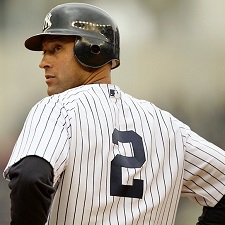
Having experienced the modus operandi of George Steinbrenner from the day in 1973 that he became the team’s principal owner, I asked Michael if Steinbrenner ever wanted to trade Jeter.
“He didn’t want to trade him,” Michael replied, “but in spring training of ‘96 we had made plans for him to be our shortstop. One day he made three errors and someone put it in George’s ear that he wasn’t good enough and we should send him down.
“There was a meeting in Joe Torre’s office. Fifteen to 18 people were there. I had just stepped down as general manager and Bob Watson asked me to come to the meeting.
“I said wait a minute, we decided he was going to be our shortstop. Now two, three days before the season you’re saying this. I said this was ridiculous. George said ‘I remember.’ We stayed with him and he became rookie of the year.”
Jeter became a lot more than that. Without flash or fanfare, he became a member in very good standing of the club of celebrated Yankees. In very short order next season, he will join the legitimate residents of Yankee Stadium’s Monument Park:
- Babe Ruth
- Lou Gehrig
- Joe DiMaggio
- Mickey Mantle
- Yogi Berra
- Mariano Rivera
I say legitimate residents because the Yankees this season added Tino Martinez and Paul O’Neill to the collection, and I don’t understand why. I was told that Martinez is there because he is a Steinbrenner family favorite, but that’s hardly a reason to place him with guys like Ruth and Gehrig.
Not taking anything away from Martinez and O’Neill, two very good players, but their presence in Monument Park dilutes the honor for the deserving players. Jeter, on the other hand, is a natural.
The Yankees are honoring him in a special farewell ceremony today as his glittering career nears the end, and he deserves all of the accolades.
As consistently good as Jeter has been, his achievements have been more subtle than those legendary Yankees but nonetheless brilliant.
His single against Kansas City Friday night gave him 3,449 hits, sixth most in history. Only Pete Rose, Ty Cobb, Henry Aaron, Stan Musial and Tris Speaker had more hits.
He is tied for fourth with his eight 200-hit seasons. He has the most hits among Yankees players, and when he surpassed Gehrig’s total of 2,721 in 2009, Gehrig had been No, 1 for 72 years.
With 1,917 runs scored, Jeter is 10th on the all-time list but will pass Alex Rodriguez for ninth when he scores three more runs.
Jeter has started 2,646 games at shortstop (through Saturday), more than any other player started at the position, according to Elias Sports Bureau. He has played in 2,660 games at short, the most games any player has played at any single fielding position without playing another position.
Jeter has had his defensive critics, especially in his later years, but when they start using defensive statistics to make their case, they lose their credibility, as far as I am concerned. Jeter has always had intangibles that the statistics cannot measure.
The Yankees have won five World Series and played in two others with Jeter in their uniform. He was as responsible as any of his teammates and more than most for that success. He is the last active member of the core four plus one (Bernie Williams).
 Those players owe their presence with the Yankees to Michael, who was the general manager in Steinbrenner’s absence in the early ‘90s who changed the culture of the organization. He has received credit for his pivotal role but not enough.
Michael, for example, was an early advocate for Jeter despite the very rough edges the youngster showed defensively. In his second season in the minors, 1993, Jeter committed an astounding 56 errors for Class A Greensboro.
“Tim Culllen, a former player, who was Greensboro’s manager, called me,” Michael recalled, “and said, ‘Where the heck did you get this guy? He’s the worst fielding shortstop I’ve ever seen.’ A month later I went down to see him. He was careless and didn’t have a good first baseman.”
Michael, a former shortstop himself, could understand the miscues. He said he made 50 errors in one of his minor league seasons. Jeter, Michael pointed out, cut his error total in half after his Greensboro experience.
Michael saw other Jeter attributes.
“He had great hands,” said Michael, a senior vice president and special adviser for the Yankees. “I liked the athleticism he had, his ability. He had a good arm, good range. He ran well, looked like he was going to hit. He was skinny early and I said he had to get bigger. He had to gain 15, 20 pounds. He was about 155 and he started gaining weight. Each year for three, four years I asked him about his weight.”
Jeter today is listed at 195. “He made himself the player he is,” Michael said. “Without the weight he wouldn’t have been this good.”
And another thing.
“He’s the best I’ve ever seen charging balls, fielding bouncers and slow-hit balls. I’ve never ever seen him miss the ball. I never saw anyone who charged bouncing balls or slow rollers like he does.”
More generally, Michael said, “No one I saw was better over-all. No one over-all could’ve been better the first 15 years. He worked at it all the time. He never quit working at it. He wanted to play every day. He made himself what he was. He’s smart and he’s had the makeup. He’s durable.”
Did Jeter’s hitting (.310 career batting average) surprise him?
“I started getting used to it,” Michael said. “After eight or nine seasons I didn’t get surprised anymore.”
He wasn’t surprised either by Jeter’s response to something Michael said to him Friday.
“I was just downstairs kidding him about being nervous Sunday,” Michael said. “He said for what? I said you’re going to be nervous. He said for what?”
Obviously, Jeter would find the ceremony no different from batting with the bases loaded in the ninth inning of Game 7 of the World Series.
A RELATIVE RAISES BAD MEMORIES FOR YANKEES
Chaz Roe, a new Yankees’ relief pitcher, was not related to Preacher Roe, but he is related to Bill Mazeroski.
Preacher Roe pitched for the Pittsburgh Pirates and the Brooklyn Dodgers for 11 seasons in the ‘40s and ‘50s. He won 22 games for the Dodgers in 1951, his best season, and was named National League pitcher of the year. He died at the age of 92 in 2008.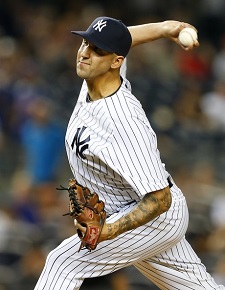
That year Chaz Roe was pitching in the Colorado Rockies’ minor league system. The Rockies had selected him as the 32nd player picked over-all in the 2005 draft. He also pitched in the Seattle, Arizona, Texas and Miami organizations before the Yankees acquired him Aug. 31.
Relieving for the Yankees against Boston Sept. 2, Roe pitched for the team his great uncle destroyed in the 1960 World Series with a ninth-inning home run in Game 7. Roe is Mazeroski’s great nephew.
“He’s my dad’s mom’s brother,” Roe said, somehow able to keep that straight.
The 27-year-old right-hander said he knows of Mazeroski more from baseball than the family.
“I probably met him when I was in high school,” Roe related. “I saw him on a ‘greatest moments in baseball’ show on ESPN and did some research. Our high school team always went down to Florida for spring baseball camp. His son was coaching a team and Bill was down there one time and I was able to meet him. After that I haven’t seen him in eight years.”
Mazeroski lives in the Pittsburgh area and Roe’s family lived not far away in Steubenville, Ohio, but when Chaz was 2 years old, the Roes moved to Kentucky, where his father had played college football.
Roe reached the major leagues last year, relieving in 21 games for Arizona. A 50-game suspension for a positive drug test delayed his advance. He was suspended, he said, for using Adderall.
“I tested positive in the off-season after 2011,” he said, “but I wasn’t on anybody’s roster after that season. I was a free agent. I played independent ball in 2012. After that season Arizona picked me up and I served the suspension.”
Roe said it was too soon to tell what would happen after this season. A starter earlier in his career, Roe said if the Yankees keep him, “I’ll do whatever they ask of me and do my best.”
LOOK FOR LA RUSSA, STEWART TO REUNITE
As a pitcher who was a 20-game winner for four successive seasons from 1987 through 1990, Dave Stewart was as fierce a competitor as ever played. He pitched for the Oakland Athletics, and his manager was Tony La Russa. They were integral members of three consecutive World Series.
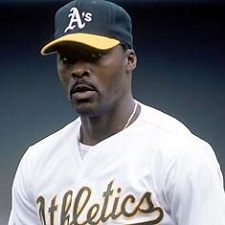 That relationship may result in the two men reuniting in Arizona, where La Russa is chief of baseball operations with the Diamondbacks.
La Russa fired Kevin Towers, his general manager, last week. La Russa has acknowledged that Stewart is one of the candidates he will consider for the opening. But there are other bits of evidence that could make Stewart La Russa’s No. 1 choice.
Stewart has been a player agent for several years, and he reportedly is looking to sell his agency, seeking a front office job at the same time.
La Russa was inducted into the Hall of Fame in July, and according to a baseball executive, he arranged for a house in Cooperstown for three of his former players to stay for induction weekend.
The players were Dave Henderson, Carney Lansford and Stewart. Henderson and Lansford are not candidates for the Arizona job; Stewart is.
A number of other names have been mentioned for the Diamondbacks’ position, but none has the intrigue raised by the Stewart possibility.
Speaking to reporters about Stewart, La Russa said, “He showed his business side. He’s been a successful agent. That’s a good background, and I know he knows the game, so he was one of the first people that I thought of that would be a good fit.”