As chairman of the Chicago Bulls, Jerry Reinsdorf was among the National Basketball Association owners who unanimously endorsed David Stern’s recommendation for Adam Silver, his deputy, to succeed him as commissioner.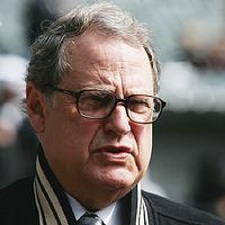
As chairman of the Chicago White Sox, Reinsdorf has indicated his opposition to the reported plan of Bud Selig, commissioner of Major League Baseball, to have the owners approve his recommendation of Rob Manfred, his No, 2, to succeed him.
Selig hasn’t been talking about his succession plan and didn’t return a call Wednesday seeking comment on Reinsdorf’s injecting his own views into the process, But in a visit to the Phillies’ park Wednesday night, Selig told reporters, “I know there have been some stories and things. But I try not to overreact.”
Although Selig won’t acknowledged that he has a succession plan, many people inside and outside baseball, apparently including Reinsdorf, believe Selig will propose that chief operating officer Manfred succeed him when he retires next January.
The plan has two other elements, according to what this column has reported as far back as February: Selig would not leave completely; he would remain a senior adviser, and a committee of three or four owners would serve as an advisory panel.
Reinsdorf, who in his 34 years as the White Sox chairman has not made a habit of talking to reporters, plunked himself into this element of the Selig succession by talking about it to a reporter for The New York Times.
The reporter, Michael Schmidt, quoted Reinsdorf as saying he “’had never said a bad word about Bud,’” but the article added, “he said that he believed that the owners – not Mr. Selig – should be in charge of picking the next one.”
Why is the baseball Reinsdorf acting 180 degrees from the basketball Reinsdorf?
“David made the recommendation and everyone embraced the idea,” said a lawyer with vast knowledge of NBA developments. “It was discussed all along that when David stepped down Adam would succeed him. There was always the sense that everyone wanted Adam. There was no search. The only thing I can think of is Adam did a better job of getting the owners’ support.”
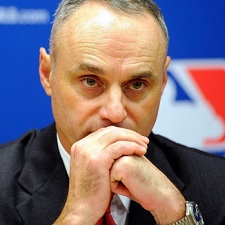 Manfred declined to comment on the matter, and I can’t blame him for that because he has nothing to gain from going public at this point.
Reinsdorf opted to have a White Sox communications executive respond for him, which limited my ability to ask him questions. “Jerry is not going to comment publicly at this time,” Scott Reifert said in an e-mail Wednesday.
I was most interested in finding out why Reinsdorf has had different views about his stances on Stern’s support of the NBA’s Silver and Selig’s reported position with MLB’s Manfred.
“Different leagues; different circumstances,” Reinsdorf said through a second Reifert e-mail Wednesday night. In a direct conversation I would have asked Reinsdorf to explain the circumstances he referred to, but that was as good as I was going to get.
But when I asked Reifert to ask the owner that question, he said, “That hasn’t come up. I haven’t heard that.”
That means the Times’ Schmidt didn’t ask Reinsdorf the question when he had a chance to seek a more specific explanation.
“Jerry talked to Schmidt,” Reifert said. “But he’s part of the committee, part of the process. His frustrations have been resolved with the committee. Jerry is part of the process and in the end they will get the best candidate.”
Those comments may need some interpretation. I inferred from what Reifert said that when Reinsdorf spoke with Schmidt, he expressed frustration that Selig seemed to be planning the succession privately and with no assistance from the owners. Selig, however, then appointed him to a seven-owner committee that would help plan the succession and that alleviated his concerns.
According to Reifert, Reinsdorf “shot down” two rumors that were afloat in the baseball stratosphere, one in the Times.
“Mr. Reinsdorf began agitating last year with a few other owners,” Schmidt wrote, “proposing that he and two others should run the league instead of having one full-time commissioner.”
There were also reports, Reifert said, that Reinsdorf wanted to be commissioner.
“He said ‘I wouldn’t vote for myself,’” Reifert said.
That Reinsdorf should have any differences with Selig in which he would try to undermine the commissioner is almost incomprehensible. For more than 30 years MLB has had no closer pair of owners. i
i
On a personal level, Selig is as close to Fred Wilpon of the Mets, but Wilpon never teamed with Selig, as Reinsdorf did, in leading the owners’ scorched- earth efforts against the union that led to the disastrous 1994-95 strike and cancellation of the 1994 World Series. Selig, at least, admits that he learned from the labor war. Reinsdorf has always blamed it on Donald Fehr, the union leader.
As far as the Wilpon-Selig relationship, Wilpon was not part of the move led by Selig and Reinsdorf in 1992 to force Fay Vincent out of the commissioner’s office so he wouldn’t get in their way when they declared war on the union in 1994.
The Times story made it seem as if Selig and Reinsdorf were at odds, perhaps having had a fallout. But Reifert said, “He and Bud continue to talk. They talked yesterday.”
And Reinsdorf’s feeling about Manfred as a candidate to succeed Selig? Schmidt wrote that Reinsdorf “is determined to stop Manfred from becoming commissioner and would accept pretty much anyone else.”
Knowing Reinsdorf as I have for his entire tenure with the White Sox, I find the latter part of that statement absolutely silly. But I’m also skeptical of Reifert’s comment: “He hasn’t ruled anyone out.”
If Reinsdorf is intent on undermining Selig, I have to raise some questions:
- Why would Reinsdorf cross Selig on his way out?
- Why has it been OK for Selig to make it possible for Reinsdorf to make millions and increase the value of his franchise but not OK for him to choose a successor because he is not an owner?
- What does Reinsdorf have against Manfred, who might be as responsible as Selig for raising the value of his team because he has been able to negotiate three consecutive collective bargaining agreements without a work stoppage, creating unprecedented labor peace that has been hugely responsible for the skyrocketing rise in industry revenue to $9 billion or more?
- Has the 78-year-old Reinsdorf been asleep and not noticed what has been going on?
- After 22 years with his buddy Selig running the game, why would Reinsdorf want to subject himself to an outsider running the game?
All I can say is Reinsdorf going against Selig is like Butch Cassidy going against the Sundance Kid or Robin turning on Batman.
The Times article, which was seemingly exaggerated, mentions several possible candidates, as does a second story Schmidt wrote a few days later.
The second story was especially interesting because it featured Robert Iger, chief executive of the Walt Disney Company. “Disney Executive Gains Supporters,” the headline said. What was so interesting?
It was the first time in my memory that a Times baseball story followed a similar report on the New York Post’s Page Six.
But in neither Times story did Schmidt mention the most obvious candidate who isn’t Manfred. That would be Steve Greenberg, who has these credentials:
- Deputy commissioner under Vincent
- A highly successful investment banker and a managing director with Allen & Company for 12 years, who has sold several baseball teams, including Selig’s Brewers
- Long-time close friend of Reinsdorf and well liked by Selig and many others in baseball
 If Selig were to fail to get at least 23 votes from the 30 owners and thus not succeed in his succession plan with Manfred, a high-ranking club executive said, “Greenberg would be a perfect middle-ground candidate. “Reinsdorf loves Steve, and he’s the one who could get the votes from owners.”
Greenberg, a former minor league player and son of Hall-of-Famer Hank, is known to be reluctant to allow himself to be considered a candidate, but the executive said the owners could go to him and say, ‘Steve, we really need you. Wyoming for two months? Is that so important?’”
The Wyoming reference was to the two months the Greenbergs spend at their home in Jackson Hole every summer.
Greenberg has been reluctant to talk about the commissioner’s job but said on the telephone Tuesday, “It’s come up and I’ve declined. I was approached early in the process and I declined.”
Who approached him? “A handful of people in the inner circle,” he said.