If I had to select a person – player, manager, coach or executive – who was, to me, the most impressive figure I have covered in all of my years of baseball coverage, it would have to be Nolan Ryan.
A Hall of Fame pitcher since 1999, Ryan will one day be elected to the Hall again, the second time as an executive. In my opinion, he has already done enough to merit selection as an executive.
As president and chief executive officer of the Texas Rangers, Ryan rescued the Rangers from the sink hole in which Tom Hicks, the former owner, had buried them and built a team that has won two consecutive American League pennants and was a whisper away from winning a World Series.
At least as impressively, if not moreso, Ryan has revolutionized the culture of pitching in Texas and has boldly staked a claim to the restoration of pitching as he knew it when he began pitching in the major leagues in 1966.
Believing in pitching more innings and throwing more pitches than pitchers are permitted these days without risking injury, Ryan has instructed Rangers pitchers that they are expected to pitch deeper into games than they had become accustomed to.
No more “give me five good innings and you’re out of there.” No more “just pitch well enough to give us a chance to win.” If a pitcher wants to impress the boss in Texas, he goes as far as he thinks he can and then goes some more.
As a proponent of ending the pampering of pitchers, I like what Ryan is doing and root for him to succeed so that others may follow. Pitching, however, is not what prompts me to write about Ryan.
I was attracted to him in this instance by recent comments he made about the possibility of re-signing Josh Hamilton, who can be a free agent after the season and has had a monstrous first third of the season.
Entering Saturday’s games, Hamilton was first or second in the American League in batting average, on-base and slugging percentages, the combined total of those two, home runs, runs batted in, runs scored, total bases, hits, extra-base hits and batting average with runners in scoring position.
Those numbers will translate into equally impressive numbers with dollar signs attached once Hamilton becomes a free agent.
 “It’s hard to predict what will happen; things just have to play out,” Ryan told reporters recently when he was asked the likelihood of the Rangers signing Hamilton. “I think Josh would like to stay in Arlington; he’s very comfortable here and his family is very comfortable here. We’re certainly hoping we can work a deal out.”
Being realistic, though, Ryan added, “I think they’re probably of the mindset to go through the season, see what happens and see what the market is.”
Ryan, 65, knows the mindset well. He first became a free agent Nov. 1, 1979.
“Yeah, I certainly have a perspective of where Josh is and what he’s going through,” Ryan said in a telephone interview. “I have a much better understanding of his viewpoint and the challenges he has. I can’t say the challenges aren’t bigger these days. It gives me an interesting perspective now that I’ve been on both sides.”
Ryan, 32 at the time with 12 years in the majors, four with the Mets, eight with the Angels, recalled that what was most prevalent on his mind in his decision was “the uncertainty of leaving California and having a special relationship with Gene Autry,” the Angels’ owner.
However, Ryan said his thoughts about leaving were driven by the Angels’ general manager, Buzzie Bavasi.
“I had always thought about playing at home,” the Houston area native said, “but I didn’t think it was realistic because the Astros were in receivership and had just been sold to John McMullen.”
However, McMullen surprised Ryan with his interest after Bavasi had only denigrated him. Speaking of his negotiations with Bavasi, Richard Moss, Ryan’s lawyer, recalled, “I would usually find some reason to remind him of how many times Nolan had led the league in strikeouts, and he would respond by reminding me of how many times he led the league in walks.”
“Buzzie could also be infuriating and counter-productive to the interests of the club,” Moss added. “At season’s end, he adopted a line with the press that he could replace Nolan’s 16-14 record with two 8-7 pitchers.”
That view certainly did not endear Bavasi to Ryan. Neither did Bavasi’s response to a contract proposal in which Ryan’s salary in the third and final year would be $1 million. No player had ever had a $1 million salary.
“Buzzie was incensed,” Moss said. “He told the press the next day that Nolan and I were crazy in outrageously demanding a million dollars a year.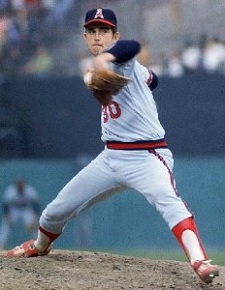
It was a crucial mistake by Buzzie because the reaction, both within baseball and with the public in general, was: What’s wrong with that – we’re talking about Nolan Ryan. Buzzie had raised the stakes.”
He had help from George Steinbrenner, the free-spending Yankees’ owner.
“George Steinbrenner, as we well know, had a way of setting the market,” Ryan said. During the draft of negotiating rights to free agents, which was part of the free-agent format in those early years, Steinbrenner mentioned Ryan and a million dollars in the same sentence.
McMullen would not prove to be the spender that Steinbrenner was, but he had been a limited partner with the Yankees and knew what it took to win. He quickly and emphatically told Moss he wanted Ryan and what he was willing to pay his pitcher.
“I was surprised and elated,” Ryan said. “I told Dick to concentrate on negotiating with Houston to see what that possibility was.”
McMullen was willing to make Ryan the first $1 million-a-year player, offering a guaranteed salary of $1 million a year for three years plus an additional $500,000 in signing bonus and retirement pay.
“I didn’t anticipate signing a contract of that magnitude,” Ryan said. “I thought Dick was shooting high, but you never know about the market.”
Free agency is basically the same now as it was then; only the names and the numbers have changed.
“There are a lot of unknowns,” Ryan the president and chief executive officer said. “You don’t know the market or who the players are going to be setting the market and participating in the market as well as not knowing the kind of year he’s going to have,” he added, speaking specifically of Hamilton. “He’s gotten off to a phenomenal start. If he stays on course, you’re going to have a great season.”
Considering that Hamilton missed four years (2003-06) at the critical ages 22-25 because of substance abuse, he is having a phenomenal season and career.
He was the American League most valuable player in 2010, winning the batting title with a .359 average, hitting 32 home runs and driving in 100 runs as the Rangers won their first A.L. pennant. Through Friday’s games this season he was hitting .366 (second to Paul Konerko’s .376) and was leading the league with 21 home runs and 57 r.b.i.
 Each home run and r.b.i. drive up the price some team, the Rangers or someone else, will have to pay to secure Hamilton’s services. Ryan knows that feeling. But as well as he knows how the slugging outfielder can wreck opposing pitchers, he also knows Hamilton’s self-destructive side.
Twice in a three-year period, the more recent time last Jan. 30, Hamilton suffered a relapse in his recovery from alcohol addiction.
Whether or not that ongoing problem will figure in Hamilton’s decision remains to be seen, but it probably should. The Rangers have dealt with the problem for five years and have learned how to cope with it. At the same time, despite his isolated relapses, Hamilton has found a comfort zone in Texas and has flourished.
Players with less severe problems have abandoned their comfort zone to go elsewhere for the money and have paid a huge price.
“It’s human nature,” Ryan, who played for 15 more seasons and pitched three of his seven no-hitters after leaving California, said, not speaking specifically of Hamilton and his circumstances. “Switching teams is a big part of the issue. They come into a situation they’re not familiar with. Expectations are high, they want to get off to a good start to justify the commitment the club made to them. If they stay with the same club, they often are better off.”
Hamilton has various reasons to stay in Texas, including the comfort he has established there and the fact that the Rangers gave him a chance to establish himself as not just a major leaguer but one of the majors’ most productive hitters.
Those are not reasons for the Rangers to ask for or expect a discount, and it’s not likely to be how Ryan approaches talks with Hamilton and his agent, Michael Moye. Ryan, after all, has been there and done that.
SCORE ANOTHER FOR MINAYA
Five weeks ago I pointed out that the Mets’ entire starting lineup for a game against Miami came entirely from their minor league system, eight of the nine players draft choices selected by then general manager Omar Minaya and his aides, the ninth David Wright, who was drafted when Minaya was assistant general manager.
My point was meant to counter the criticism leveled at Minaya, when he was fired, for not having built a productive farm system.
Now comes an answer to another criticism of Minaya, that he grossly overpaid in players and money in acquiring Johan Santana from Minnesota in 2008.
But Santana is the man of the year for the Mets, and the year isn’t even half over. In the 51st year of the Mets’ existence, in their 8,020th game, Santana ended their most memorable void by pitching a no-hitter. If he hadn’t joined the team, maybe some other pitcher would have eventually pitched the Mets’ first no-hitter.
But Santana pitched the historic no-hitter first, and he did it wearing a Mets uniform because Minaya put him in it.
NO RIGHT OF FREE SPEECH IN SPORTS
This sort of thing comes up occasionally. A player or manager or coach publicly and harshly criticizes an umpire for a decision he made, and the player is ejected from the game and subsequently disciplined with a fine or a suspension.
Then somebody on his team cries foul. It happened recently with the Yankees. Catcher Russell Martin disputed an umpire’s call and did not dilute his feelings in speaking with reporters.
Martin avoided discipline, perhaps because the umpire, Laz Diaz, had imposed his own punishment during the game. He refused to allow Martin to throw baseballs to the pitcher, telling the catcher it was a privilege to throw the ball to the pitcher and he had to earn the privilege.
Brian Cashman, the Yankees’ general manager, objected to any act taken against Martin. “Russell exercised his First Amendment Rights,” Cashman said.
However, neither Martin nor any other player, coach or manager has a Constitutional right to free speech in baseball. Free speech applies to laws enacted by government; it does not apply to private industry, such as baseball.
TIN CUP, NOT FEES, FOR BORAS
No one will have to hold a fund-raiser for Scott Boras, but the busiest agent in the business on draft day seems to be headed for smaller pay days resulting from this week’s annual draft. The clubs and the union significantly changed draft rules in the new collective bargaining agreement with the clubs at least motivated by a desire to corral Boras.
 Among the new elements of the system, clubs will not be able to sign draftees to major league contracts and clubs will be assigned bonus pools for signing draft choices, with tax penalties and loss of draft choices threatened for exceeding their pool.
I haven’t spoken with Boras about the changes because he doesn’t return my calls. He stopped talking to me because he didn’t like my questions. However, in an interview with USA Today, Boras predicted doom and gloom for baseball because of the new draft rules.
His warning of dire developments reminded me of how then Commissioner Bowie Kuhn predicted disaster for baseball once free agency began. Baseball has done very well despite Kuhn’s warning, and I suspect the game will survive Boras’ view of doom and gloom.
“This will hurt all of baseball,” Boras told USA TODAY. “This was not good for the game at all. There have to be some amendments to it because this dramatically impacts the game. It goes against the revenue sharing concept. This dramatically affects parity. That concept is gone. A team’s chance to dramatically improve has been dramatically reduced.
“This will affect (general managers’) careers. This will affect scouts’ careers. This is restricting their expertise. The value they invest in scouting is no longer worth the payment of the scouting department. Their ability has about been minimized by 30 to 40% because they can’t draft a certain way. The intellect of scouting has been reduced. You want to pay for talent, but now it’s going to be governed by artificial behavior.”
There was more, but you get the idea of where the game is headed in Boras’ eyes. Back in the 1970s, I was certain that developments would show Kuhn to be wrong. I’m guessing Boras will be wrong this time. Kuhn’s ignorant view was affected by the owners’ self interest. In this latest instance Boras is influenced by his self interest.