Joe Torre was celebrated as if he were god-like when he managed the Yankees to four World Series championships in five years. Yet Torre was not perfect. His most glaring weakness was the way he used his pitching staff, particularly the bullpen.
Under Torre, a relief pitcher was susceptible to disappearing into a dark corner of the bullpen, not to be seen for weeks at a time. Relievers had to gain Torre’s trust. If they pitched ineffectively, they lost the chance to be called upon to work some of those innings between the starter and Mariano Rivera.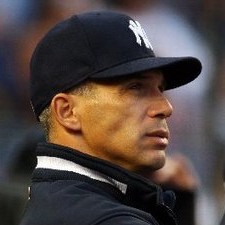
As a result, Torre overused the relievers he came to trust and wore them out. Rivera was an exception. He is one of a kind. He virtually always can be trusted, and he never wears out.
Joe Girardi, Torre’s successor, has become the anti-Torre. He doesn’t seem to have a reliever he doesn’t love and wants to use. It’s easy to get that feeling watching Girardi work his bullpen in this post-season.
He used seven relievers in the Yankees’ 11-inning, 5-4 loss to the Angels in Game 3 of the American League Championship Series. Two days and one game earlier, he also used seven relievers in the Yankees’ 13-inning, 4-3 victory.
Girardi, in fact, used seven relievers three times in a five-game playoff span. And he didn’t make those changes because his pitchers were getting shelled. He reached the nadir of his playoff pattern in the 11th inning of Game 3 against the Angels Monday.
The game was tied 4-4, and Girardi had David Robertson start the 11th in place of Rivera, who got out of a one-out, bases-loaded fix in the 10th by inducing two ground balls.
Robertson had relieved twice in post-season games, allowing one hit and no runs in two and a third innings. In this game he retired the first two batters in the 11th, leaving the Angels with only more out in the inning.
Howard Kendrick, a right-hand hitter, was the next batter, but Girardi didn’t let the right-handed Robertson pitch to him. Instead he summoned the right-handed Alfredo Aceves. Kendrick promptly singled to center and raced home with the winning run as Jeff Mathis drilled a double to left-center.
Overmanaging? Girardi wins the award hands down.
“We like the matchup with Ace better, the two guys,” Girardi said of his fateful decision to remove Robertson. “And it didn’t work.”
Why did he like the matchup better?
“It’s just different kind of stuff against those hitters,” the manager said. “And we have all the matchups, and all the scouting reports, and we felt that, you know, it was a better matchup for us.”
Obviously, Girardi was wrong, and his bad decision illuminated the brief and frequent use he has made of his relievers in the post-season.
Before he got to Robertson and Aceves in Game 3 he used three pitchers for a third of an inning each. In Game 2 he used the same three pitchers – Joba Chamberlain, Phil Coke and Damaso Marte – for a third of an inning each.
In the 11-inning Game 2 of the division series against Minnesota, Chamberlain, Coke, Marte and Phil Hughes pitched less than an inning each. In Game 3 Chamberlain and Hughes pitched less than an inning each.
Thus far Girardi has not undermined his or the team’s success with his pitching practices. The Kendrick and Mathis hits against Aceves might have been an aberration. But when a manager changes pitchers as often as Girardi has, he is very likely waiting for trouble to hit him in the face.
Another member of the Yankees, Alex Rodriguez, knows about post-season trouble. In three division series before this year’s, he hit .133, .077 and .267, a combined .159 (7-for-44). Fans and the news media let him know about it.
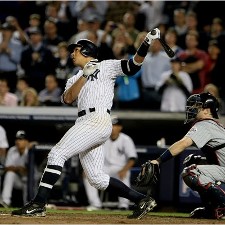 But this is a different year and a different Rodriguez. Can all the A-Rod haters now leave him alone? Can they acknowledge that the guy is a pretty good hitter and stop bad-mouthing him for his inability to get post-season hits? Or if the Yankees get to the World Series and he doesn’t hit in those games, will they say “told ya so?”
Rodriguez has never played in a World Series so he can’t be criticized for not hitting in the World Series. But he has been plenty criticized for not hitting in the post-season series in which he has played.
No longer. Where would the Yankees be in this post-season without the hitting Rodriguez has produced? The Yankees won all three division series games and the first two league series games, and Rodriguez contributed timely hits in all of them.
In his first two times at bat in the first game against the Twins, Rodriguez made the last outs of innings with a runner at first each time. It was enough to get his critics talking their familiar talk. But in his third at-bat he served notice that this year was different, driving in a run with a two-out single and increasing the Yankees’ lead to 4-2. Two innings later, he delivered another two-out run-scoring single.
Rodriguez was 0 for 2 again in Game 2 when he stroked yet another two-out single, tying the game, 1-1. When he batted next, in the ninth, the Twins were ahead 3-1, and he slugged a two-run home run against their closer, Joe Nathan.
Following his pattern in Game 3, Rodriguez made outs his first two at-bats, then hit a game-tying home run in the seventh. In the ninth he walked and scored a run.
His cumulative work for the series: 5 hits, including 2 home runs, in 11 at-bats for a .455 batting average and 6 runs batted in, all team-leading figures.
A-Rod did not produce as lusty an average in the first three games of the league series against the Angels, but he gave the Yankees a 1-0 lead with a first-inning sacrifice fly in the first game and he clubbed a dramatic home run against Brian Fuentes leading off the 11th inning of Game 2, tying the game, 3-3.
He hit another home run in Game 3, increasing the Yankees’ lead to 2-0, but the most startling result of his post-season efforts showed up in the ninth inning of that game. With two out, no one on base and the game tied, 4-4, Fuentes walked Rodriguez intentionally, an unusual strategy (purposely putting the potential winning run on base) and a striking compliment to any hitter but one given to very few hitters.
The Angels’ unusual strategy worked. Fuentes struck out Jerry Hairston Jr., and the Angels went on to win, 5-4, in 11 innings.
There is plenty of time left in the series for Rodriguez to hit some more meaningful home runs, which his detractors say he seldom hits, and there is time for Girardi to overuse his bullpen to the team’s detriment again. The critical question for the Yankees is which development will prevail.
