John Henry divided the years of his youth among Illinois, Arkansas and California. He made his many millions in Florida and Connecticut. It wasn’t until the last month of 2001, when Henry was 52, that he began a foray into Boston, where he is now an icon as principal owner of the Boston Red Sox and owner of the Boston Globe.
As owner of the Red Sox, Henry oversaw World Series championships in 2004 and 2007. As the new owner of the Globe, Henry has become the recipient of one of the most astounding deals in finance history.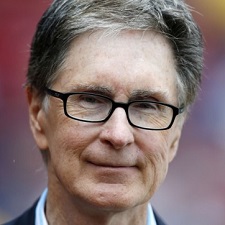
Henry recently opened his bulging wallet and took out $70 million to give to The New York Times for the Globe, New England’s premier paper, and assorted other area media properties, including the Worcester (Mass.) Telegram & Gazette.
What is astounding about the deal is the numbers. The Times paid a total of $1.395 billion for the two newspapers, $1.1 billion for the Globe in 1993 and $295 million for the Worcester paper six years later.
Although records of financial transactions are not kept neatly in a record book as baseball deals might be, financial analysts would be hard pressed to find a deal to match the Times’ misguided venture into high finance. It is mind boggling to think a company as economically sophisticated as one would think the Times should be could blunder as badly as the Times company has.
In selling to Henry for $70 million (at least it was all cash) the Times lost 95 percent of its original investment of $1.395 billion. Actually that percentage is even closer to 100 percent because as part of the deal the Times agreed to assume pensions for Globe employees. The cost of that expense is not known, but some untold number of millions has to be subtracted from the $70 million it is receiving.
“That is not insignificant,” a financial analyst said.
Research has found nothing to match the Times’ loss. In 1999 Ford bought Volvo Cars from Volvo for $6.45 billion and in 2008 sold Volvo Cars for $1.8 billion to the parent of Chinese motor manufacturer Geely Automobil. Ford took a 72 percent loss in those transactions.
In 1989 General Motors bought 50 percent of Saab for $600 million. In 2000 GM exercised an option to purchase the remaining 50 percent for $125 million, making a total expenditure of $725 million.
In 2010 GM sold Saab to Spyker Cars N.V. for $74 million in cash plus $320 million in Spyker stock. The next year Spyker filed for bankruptcy. Assuming the Spyker stock was worthless, GM suffered a loss of 89.8 percent.
The Times’ report of the Times company’s sale of the Globe said the Globe “is not the only paper to sell at a heavily discounted price.” It reported that last year Philadelphia’s newspapers sold for $55 million after having sold for $515 million in 2006. That was an 89 percent reduction.
In a news release the Times company’s chief executive officer Mark Thompson said that “as a result of this agreement, we will be able to sharpen our company focus on and investments in The New York Times brand and its journalism.”
 Following announcement of the Globe’s sale to Henry, there were reports that competing bidders claimed to have offered more money for the newspaper. If that was so, it’s possible that the Times, despite a need for revenue, opted to sell to Henry because of their relationship.
When Henry and his group bought the Red Sox in 2001, the Times company was the largest minority partner, owning 17.5 percent of the Red Sox and other properties, including Fenway Park. The Times company sold its share early last season.
The Times emerged from that transaction in a more advantageous position than it did from the Globe sale. The Times reportedly paid $75 million for its 17.5 percent share and sold it for $225 million.
The Times declined to comment on the reports of higher bidders but issued this statement in response to my inquiry:
“The sale to John W. Henry is the result of a very full and active sales process. In reviewing bids, we took many factors into consideration and at the end of the process concluded, along with our Board of Directors, that this agreement to sell the New England Media Group to Mr. Henry was in the best interest of our shareholders as well as of The Boston Globe, the Worcester Telegram & Gazette and the Boston community.”
Henry is not the first owner of a major league baseball team to own a newspaper. The best known such relationship was the Tribune Company’s ownership of the Chicago Cubs.
After the sale of the Globe was announced, concern was expressed about a conflict of interest in how the Globe’s coverage of the Red Sox might be affected.
“Every successful local businessman would have at least one significant conflict,” said a businessman close to Henry. However, no other businessman owns the Red Sox.
I had a similar concern when I worked for the Times and the Times company became a minority partner in the Red Sox ownership. But no one at the Times ever told me what to write or not write about the Red Sox. Of course, there’s a difference between my situation and that of the reporters and columnists who write about the Red Sox for the Globe.
My worst experience came before the Times company was a minority owner. Some of you may be familiar with my story because I have written about it before.
At some point before Henry’s group bought the Red Sox I learned that the Times company was interested in the team. Its main interest was in the regional cable network, NESN, which would be part of the deal.
I was working for the Tines at the time, and initially I had difficulty getting anyone at the Times to comment on the company’s interest. The Times didn’t want anyone to know of its interest, and its executives were shocked and upset that I had found out about it.
Finally, I got the story confirmed, but that wasn’t all I got. I also got shafted. No reporter wants to have someone give away an exclusive story, but that’s what Janet Robinson did.
Robinson was president and CEO of the Times company and knew that I had the story because I had called her for comment. Violating every journalistic rule, Robinson called the Globe and gave it the story.
She never explained her action to me, but someone to whom she did explain it told me that because the Times company also owned the Globe and the story was important for the Globe, it wouldn’t have been appropriate for the Times to have the story and not the Globe.
It was a journalistically treasonous act by Robinson, who is no longer with the Times, and I still await her apology for her despicable behavior.