When Johan Santana pitched his second game of the season, I didn’t see it because I was in another country. But I didn’t miss anything. I had seen that game many times before, in Santana’s first season with the Mets.
It was another well-pitched game by Santana and another well-pitched game in which he did not emerge with a win. The outcome raised questions about the 2009 Mets, and there were no immediate answers.
One of the questions was not about their defense. An error by their inexperienced left fielder led to the 2-1 loss, but Daniel Murphy’s dropped fly ball was not the reason the Mets lost. Murphy’s inexperience may cost the Mets a game before long, but dropping a fly ball does not come from inexperience.
Murphy said he was lazy getting to the ball, and maybe if he hadn’t been he would have felt more confident waiting for the ball to descend and not have allowed it to pop out of his glove. But more experienced outfielders have dropped fly balls. It’s the worst feeling in the world – the ball is in the glove and suddenly it isn’t – but it happens, fortunately not too often.
But Murphy’s error did not lose the game. Giving up two unearned runs, Santana still pitched well enough to win. But the last time I looked you have to score runs to win games, and the Mets scored one run. One run will win very few games.
One game doesn’t forecast a season-long pattern of play. Failure to score in one Santana game doesn’t mean it will happen again and again. Throughout the winter, though, Mets fans constantly questioned whether the Mets’ lineup, as then constituted, would score enough runs.
In light of the Santana loss, I posed that question via e-mail to Omar Minaya, the Mets’ general manager, but he didn’t respond immediately. Maybe he was busy looking for a hitter.
Maybe Gary Sheffield will be that hitter, though to make an impact he would have to play somewhat regularly.
When Minaya was asked during the winter about adding a hitter, Manny Ramirez, for example, he said no, citing the already hefty payroll. The team’s priority was the bullpen, he explained, and that’s where he made the biggest investment.
It was understandable why the Mets didn’t pursue Ramirez for $25 million or so a year, but if their failure to invest in a hitter at any economic level undermines their division quest they would be acting, as the saying goes, penny wise and pound foolish.
It was bad enough last year that the bullpen cost Santana victories seven times by squandering leads he had when he left games, but the team’s impoverished hitting made his life even more miserable, Elias Sports Bureau research shows, failing to deliver victories 11 times when he allowed two or fewer runs.
He had a remarkable run in the last three months of the season during which he gave up more than two runs only three times in 17 starts and didn’t lose a game but gained only nine victories with eight no-decisions.
That’s what his 2-1 loss to Florida reminded me of. As I said, I had seen that game too often last year.
The Mets made a terrific trade last year to get Santana, whom I consider the best pitcher in baseball. Minaya waited patiently for other suitors, including the Yankees, to lose interest in Santana, his contract demands or the Twins’ player demands and was the last general manager standing. But Minaya didn’t get Santana to squander his sizzling contributions.
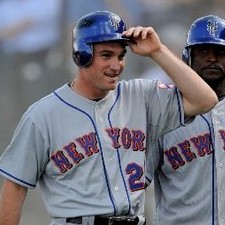 After the 2-1 loss to the Marlins, Santana focused on Murphy’s error as the reason the Mets lost, saying he didn’t think it would be the left fielder’s last error. “I’m pretty sure he’ll be back and try to do better,” the pitcher said.
But what about the hitters? Will they do better? They didn’t last year. Is there reason to expect they will do better in subsequent Santana starts?
It’s always easier to blame one player’s miscue than a collective group failure, but had the hitters departed from last year’s pattern and scored a few runs, no one would have been talking about Murphy’s error, not even Murphy. He would have been delighted to have had his fellow hitters pick him up, as baseball players are always doing for their teammates.
Manager Jerry Manuel said too much emphasis was being put on Murphy because he has changed positions. “I refuse to be concerned with that at this point,” he said. But should he be concerned about the lack of offensive punch? Maybe not on the basis of one game, but the manager saw that same script play out too many times last year not to let it seep into his consciousness this year.
Given that the Mets’ goal should be building an 18-game lead with 17 games to play – that’s the only way to avoid the events of the past two seasons – each game that Santana starts is critical.
No one knows what will happen when Oliver Perez and John Maine pitch, but the Mets can be pretty certain what they’ll get from Santana. He will consistently hold the other team to a couple of runs at most and make it relatively easy for the Mets to win.
Few pitchers in baseball have that kind of talent. Few teams have that kind of pitcher. The Mets are one of the blessed ones. They cannot afford to squander that talent the way they did last year.