The third baseman and the relief pitcher have both played for the New York Yankees, though not at the same time. Both have incurred major suspensions, though not at the same time. Rodriguez, in fact, approaches a suspension that, barring an unlikely decision by a federal judge reversing it, will surpass Howe’s as the longest for a player disciplined for a drug violation.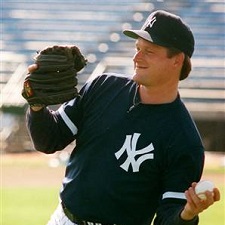
Howe was actually disciplined for life; that is, in June 1992 Commissioner Fay Vincent hit him with a lifetime ban after he had been suspended six times and then pleaded guilty to a charge of trying to buy cocaine in Montana in the off-season.
However, arbitrator George Nicolau reduced the sentence to the 119 games Howe missed in 1992, in other words, time served.
Nicolau agreed with the novel argument made by Richard Moss, Howe’s lawyer, that his adult attention deficit disorder, which a study had found could lead to cocaine addiction, had gone untreated. Furthermore. Nicolau said, Major League Baseball had not tested the pitcher as regularly as it should have.
With Howe reinstated for the 1993 season, Moss, who had been but no longer was the union’s general counsel, had made a far more successful argument than Rodriguez’s non-union lawyers, whom he used because he was angry with the union.
They succeeded only in getting their client’s suspension reduced from 211 games to 162 plus possible post-season games. Arbitrator Frederic Horowitz ruled that Major League Baseball hadn’t taken the suspension beyond the 2014 season, and he wouldn’t either.
Read more about the Howe-Rodriguez connection in my column in the Wednesday New York Times or on the Times’ web site. The link: http://www.nytimes.com/2014/01/15/sports/baseball/two-arbitration-rulings-reflecting-how-baseball-has-changed.html?ref=baseball&_r=0