In the quest to analyze a team’s offseason moves, numerous analysts spend the majority of their time arguing the merits of superstars’ new contracts, that is, the multiyear, 8-figure-a-year contracts. This past winter, the free agent signings of outfielders Matt Holliday and Jason Bay and pitcher John Lackey, rightfully so, occupied a great amount of the experts’ breakdowns of the successes of teams’ offseasons. While, as a single superstar can shift the outcome of an entire season and almost singlehandedly boost a team to the playoffs, an ill-advised contract can correspondingly cripple a team economically for years.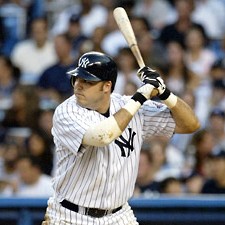
However, many of these experts give short shrift to or even fail to mention entirely in their analyses the lesser signings, the smaller, less publicized contracts. Contrary to their limited exposure, though, these signings are usually the real difference between a playoff berth and an offseason spent lamenting the issue which had prevented a team from making a run.
The American League East figures to be, once again, the most highly-contested division in baseball, with, despite the rebuilding Toronto Blue Jays, a young team on the rise in the Baltimore Orioles and three definite World Series contenders, the Boston Red Sox, New York Yankees, and Tampa Bay Rays. While the Red Sox made the biggest splash in free agency this offseason with their signing of ace John Lackey, and the Yankees both in turn bolstered their rotation with a trade for Javier Vazquez and also traded for center fielder Curtis Granderson, the hidden signings and trades will most undoubtedly be the difference in such a tight division race.
Last year’s World Series winner, the Yankees, deviated from previous strategy and made their biggest moves in the trade market this year, rather than the 2009 offseason, in which they shelled out $423.5 million for free agent stars C.C. Sabathia, A.J. Burnett, and Mark Teixeira. In signing free agents this year, the Yankees focused on signing low-risk, high-reward players with, by Yankee standards, minimal salaries to fill roster vacancies.
To attempt to fill the offensive hole left by the departures of outfielder Johnny Damon and designated hitter Hideki Matsui, the Yankees signed ex-Yankee Nick Johnson from the Marlins to a reasonable one-year, $5.75 million contract. Johnson, when healthy, can bat in the second spot in the order, and, as an on-base machine (.477 last year), provide a capable bridge between team captain Derek Jeter and MVP candidate Teixeira.
With the impending move of young stud Phil Hughes to the starting rotation from the bullpen from which he pitched so successfully last year, the Yankees quietly signed Phillie Chan Ho Park. Park, with a one-year, $1.2 million contract, adds durability and veteran experience to stabilize the bullpen and help fill the gap between the starters and Mariano Rivera.
Lastly, the Yankees gave Randy Winn a one-year, $1.1 million contract, adding him to a possible leftfield platoon with Brett Gardner. Gardner has never started an entire season before and seems best suited as a late-inning defensive substitution and electric baserunner; the Winn signing provides a complementary bat to reinforce the outfield corps.
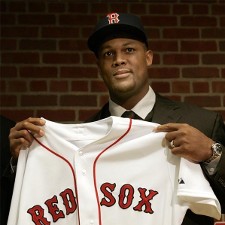 The Yanks’ chief division competitor this season will most likely be hated rival Boston, whose offseason moves of their own, save for the Lackey signing, were also less-publicized. The Red Sox’ main goal this offseason was to shore up their defense, which they seem to have accomplished with their signing of the defensive trifecta, shortstop Marco Scutaro, third baseman Adrian Beltre, and center fielder Mike Cameron. Scutaro is a definite improvement over last year’s below-league-average platoon, while Beltre, one of the top defensive third basemen in the league, is an upgrade over the aging Mike Lowell.
Newfangled fielding statistics are still not completely accurate and do not take into account all facets of a player’s fielding; however, they still can provide a glimpse into a player’s prowess. Last year, Beltre’s Ultimate Zone Rating, a relative measure of runs saved with one’s defensive play, was 14.3, fourth best in the majors among third basemen. Lowell’s rating of -10.4 tied him for eighteenth with David Wright among qualified third basemen, which was below the league average. However, Lowell does not provide nearly the offense as does Wright, making him expendable. While the UZR ratings are certainly not omniscient in any sense, it is readily apparent that Beltre is a far better fielder than Lowell.
These new additions, although structured with the club’s defense in mind, will also help, offensively, to offset the loss of Jason Bay. Scutaro is an offensive improvement at shortstop, a position at which, last year, the Red Sox were never fully satisfied. Beltre, too, is bound to increase his production (his .379 slugging average last season was the worst since his rookie year) with the move from spacious Safeco Field to hitter-friendly Fenway Park, with the short porch in leftfield a boon to pull-hitters such as Beltre.
Cameron, finally, adds three Gold Gloves to the Sox outfield, allowing for a tremendous upgrade in left field, with speedy Jacoby Ellsbury moving over to take over for Jason Bay, whose adroit offense was counterbalanced by his defensive deficiencies. Especially important in Fenway Park is the play of the leftfielder, with the odd bounces off of the Green Monster. A better fielder to play balls of that wall in 81 games could give the Red Sox the necessary edge to win the few extra games required to unseat the Yankees as division champs.
The Rays, meanwhile, didn’t focus much on free agents this offseason, instead hoping for increased production by way of the full year of major league services from young pitching phenoms David Price and Wade Davis, both of whom showed flashes of brilliance in limited time last year. The Rays’ only significant signing was of closer Rafael Soriano, who will do his best to replace retired Troy Percival and departed free agents Chad Bradford, Jason Isringhausen, and Brian Shouse. The Rays’ other losses this offseason were of utilityman Gabe Gross and backup catcher Gregg Zaun, which only slightly weakens the team’s depth.
The Rays’ impossibility in expending as much as the Yankees and Red Sox prevented them from making any bigger, more prominent moves. Therefore, the Rays return last season’s core with little change in the role positions either. While the Rays may very well receive a boost from newcomers such as Price and Davis, the fluky performances from utilityman Ben Zobrist and shortstop Jason Bartlett (each of whom had an OPS last year more than 100 points higher than his previous high) which helped them so much last year would be very difficult to replicate. The team had best hope for similar breakout performances this year, such as a return to superstar form from centerfielder B.J. Upton, to have a chance to make this year’s playoffs.
The division race will be largely decided by the performances of the stars, of the teams’ Rodriguezes and Youkilises and Longorias. Ultimately, though, with such a small discrepancy between the star power, and with the yearly unpredictability of injuries which could swing the race, the unsung signings of the offseason will prove the difference between who makes the playoffs and who stays at home.
The Red Sox will use their signings, coupled with the offensive upgrade to come from a full year of Victor Martinez and bounce-back performances from David Ortiz and J.D. Drew, to wrest the division title away from the Yankees. The Yankees were exceedingly fortunate last year with their dearth of high-profile injuries to the pitching rotation. Sabathia has thrown tirelessly the past two years, but his overworked arm could begin to show its fatigue this year, and he has looked awful in his inability to locate his pitches this spring. Burnett, too, is always an injury risk, never having pitched three full seasons consecutively. In the past, when Yankee starters were injured or struggling, the offense could compensate; this year, however, Johnson and Winn will not make up for the losses of Damon and Matsui, both cornerstones of the division’s best offense last year. The Rays, meanwhile, may be yet a year away from being able to return to the World Series; they rely too much on unproven youth starpower to be able to compete this year. Their failure to add more veteran leadership and production this offseason will doom them. The Red Sox, meanwhile, added all the right pieces, both core and complementary, necessary to win the division in 2010.
Editor’s Note: Murray Chass is on vacation but his columns will resume shortly. Pinch hitting today is a 15-year-old young and perceptive fan from Brookeville, MD. The writer is best noted for his selection, at 5 years old, of the Chicago White Sox to win the 2000 American League Central title when virtually no one else gave them a chance.