Here they go again. For the third time in four seasons, the Minnesota Twins are in the last week of the season scrapping for the American League Central championship. In the previous two instances, they won one and lost one. The outcome of this season’s scrap will be determined, to a great extent, by their four-game series with Detroit this week.
The Twins were two games behind the Tigers entering Sunday’s games. The Twins were playing a three-game weekend series in Kansas City, the Tigers in Chicago. They are scheduled to begin their four-game series in Detroit Monday night. 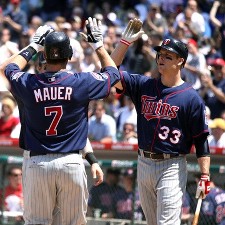
“We’ve got our hands full,” Bill Smith, the Twins’ general manager, said. “We still have a pretty steep hill to climb in the last 10 games. But a staple of a Ron Gardenhire team is we never quit. When we were six or seven games behind, we didn’t quit.”
Smith refered to the first week of September when the Twins trailed the Tigers by six and seven games. A six-game winning streak erased most of that deficit and left the Twins two games behind after games of Sept. 19.
That was not unfamiliar territory to Gardenhire and his players. In 2006 the Twins played an unprecedented season, never leading the division until they won on the final day of the season and bumped the Tigers to second.
The Tigers led the division from May 21 to that final day. They led the Twins by 12 games in the days after the All-Star break but withered under the Twins’ 49-26 charge. With three games to play, the Twins tied the Tigers for the division lead.
The Twins then lost the first two games of a three-game series with the Chicago White Sox. The Tigers lost the first two games of a three-game series with the Royals. On the final day of the season the Tigers lost yet again to the Royals. The Twins beat the White Sox and became the first team to finish in first place while holding first place only one day.
The 2008 division race was even closer. The Twins lagged two and a half games behind the White Sox with six games to play, but half of those games were with the White Sox and the Twins won them all, leapfrogging them into first with a half-game lead.
Both contenders lost the first two games of their final series, the Twins with the Royals, the White Sox with Cleveland, and both won the third game, maintaining the half-game separation. The White Sox, however, forced a one-game playoff by beating the Tigers in a makeup game the day after the season was supposed to have ended.
Playing at home, the White Sox won the playoff, 1-0, on a Jim Thome home run.
If the Twins and the Tigers finish in a tie for first, they will play a one-game playoff for the division title.
Win or lose, the Twins have demonstrated their contending consistency this season. I have said it before and I will say it again, the Twins have one of the best organizations in baseball, maybe the best, and they certainly have eclipsed the Oakland Athletics as the most outstanding low-revenue team.
The book “Moneyball” made Billy Beane, the Athletics’ general manager, a celebrity, but as good as Beane is, the Athletics have not outdone the Twins under general managers Terry Ryan and Bill Smith.
Actually the Twins’ run began under Andy MacPhail with World Series triumphs in 1987 and ‘91, but then the team took a downward turn, enduring eight consecutive losing seasons from 1993 through 2000.
 “I was taking stupid pills,” said Tom Kelly, manager of the World Series teams as well as the losing teams. “My wife gave them to me. I didn’t know she was doing that.”
But Kelly taught Gardenhire, his successor, well, and in the seven seasons before this one, the Twins won the division title four times and had the narrow miss last season.
From 2000 through 2008, the Athletics finished first four times and won the wild card once. In an eight-year span, 1999 through 2006, the Athletics finished first or second each year, giving people reason to be impressed with Beane. But the Athletics’ magic has faded. They have finished a distant third each of the past two seasons, and this year they have been a solid last the last five months.
The Twins, meanwhile, have sustained their status as a contender, and no one has cared to chronicle their achievements. When Ryan was the general manager, I told him he didn’t get the credit or the recognition he deserved, and he replied that he had received plenty of recognition. Jut not the Beane kind. But the Twins are still up and the Athletics down.
“Our strength for a number of years has been in scouting and development and patience and consistency,” Smith said. “This year’s team is no different. We have a lot of homegrown players. That said, some of the guys who have come in this season had been good contributors.”
He mentioned, among others, infielders Joe Crede and Orlando Cabrera, the only free agents among the front-line Twins. Homegrown are catcher Joe Mauer, first baseman Justin Morneau, outfielders Michael Cuddyer and Denard Span, designated hitter Jason Kubel and a bunch of starting pitchers, including Nick Blackburn, Kevin Slowey and Scott Baker.
Mauer and Morneau are the jewels of the Twins’ scouting and development efforts. The Twins made Mauer the No. 1 pick in the 2001 draft and selected Morneau in the third round in the 1999 draft.
In 2006, his second full season in the majors, Mauer became the first catcher to win the American League batting title, and then he won it again last year. He entered Sunday’s game with a league-leading .371 average, in position to make it three titles in four years.
Another title would make Mauer the first A.L. player to win three titles in four years since Wade Boggs won four in a row from 1985 through 1988.
Morneau (at right) was the A.L. most valuable player in 2006. He leads the Twins this season with 30 home runs and 100 runs batted in. But he is also finished for the season, shut down Sept. 12 with a stress fracture in his lower back. Not that Morneau is replaceable but the Twins have replaced him seamlessly.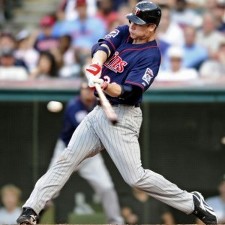
“Michael Cuddyer is one of the true leaders on our club,” Smith said. “Losing Morneau is tough on any club, but one of the things we’ve had all year is outfield depth. When we lost Justin and Michael came in to first base, we were able to replace him.”
The Twins have done that by putting Kubel in right field and opening the d.h. role to a variety of hitters. Their ability to replace Morneau’s body, if not his production, is a testament to the Twins’ production of major league players. That is a result of their scouting and development system.
MacPhail initiated the system in the ‘80s, and first Ryan and now Smith have maintained it.
“We have good people and we’ve been able to keep our people,” Smith said. “There’s a lot of consistency to our scouting and development staff. We have a lot of people who have been with us 20 years, 15 years. Our ownership has made it a good place to work. Andy MacPhail, Terry replacing him…it’s been a good place to work. People don’t want to leave.”
Ryan didn’t want to leave when he had the opportunity. In 2002 baseball owners were considering contraction, and the Twins were one of the teams to be lopped off the major league map. Toronto wanted to interview Ryan for their general manager job, but he declined, opting to stay with his people in Minnesota. It was as classy a move as any ever seen in baseball.
“We know each other and we know our strengths and weaknesses,” Smith said. “We’re not constantly trying to reinvent the wheel. Andy and Terry on the administrative side and Tom Kelly and Gardenhire (below) on the field side have emphasized the simple part of it and it has worked for us.
“Each regime has tried to maintain the positives. You tinker and tweak our programs and philosophies to try to get better. We have a lot of talented people in this organization who don’t get near enough credit. Working together has made us successful.”
 Then what happened in that eight-year span of losing seasons, other than Kelly taking stupid pills, of course?
“We lost some of our key players after 1991, Puckett and Hrbek,” Smith said. “They were the heart and soul of our club. It was tough to replace core players like that. We tried to replace them with veteran players without having confidence in our system. We were trying to be competitive.”
After seeing the new strategy fail often enough, Ryan and Jim Pohlad, son of the owner and the team’s chief executive officer, decided they needed a different plan.
“It wasn’t working, and Jim Pohlad said then why are we doing this,” Smith related. “Terry said we had to be patient. They agreed that for us to get better we had to stop signing the journeyman players and give our young players a chance.”
In 1998 and ‘99, Smith recalled, the Twins had 17 rookies, including Torii Hunter, Jacque Jones, A. J. Pierzynski, Cristian Guzman, Doug Mientkiewicz and Corey Koskie. “That group jelled and became a winning team,” he said.
“There are some cycles that every team goes through,” Smith added. “You certainly hope to minimize the down side and maximize the positive trends. We’ve been on a good run for most of this decade. It’s our job to try to extend this period as long as we can.”
TWO THIRD BASEMEN NAMED ALEX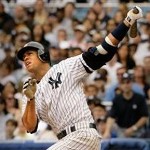
Alex Rodriguez is the Yankees’ third baseman. Alex Gordon is the Royals’ third baseman. They had similar hip operations this season. Rodriguez, whose operation was March 9, missed 28 games, beginning his season May 8. Gordon missed 79 games, virtually the entire first half of the season.
Since his return, Rodriguez’s season breaks down this way:
In 71 games before July 31, he batted .247 with 19 home runs and 57 runs batted in. In 47 games beginning July 31, before Saturday’s game, he was hitting .349 with 9 homers and 36 r.b.i. His post-July 30 pace raised his batting average to .288.
Before July 31 the Yankees had a 62-40 record (.608). Since then their record is 36-16 (.692).
Gordon, in his third major league season, has not flourished as Rodriguez has. Following his return from his April 17 operation, he hit .186 in his first month back for a .198 average at the end of August, then was sent to the minors for a 17-game stretch. Since his return, he has batted .256, raising his season average to .224.
Gordon is accustomed to struggling at the plate. In his rookie season of 2007, Gordon didn’t reach .200 until June 14 in his 60th game.
THEY CAN DO BETTER; JUST ASK THEM
 No matter how the major player awards are voted this year, some segment of the more-knowledgeable-than-thou neo-statistical posse will tell the voters they got it wrong. I recall the outraged reaction to the selection of Justin Morneau as the American League most valuable player in 2006.
The writers got it all wrong, the statistics-minded critics screamed. They don’t know what they’re doing. I don’t recall who it was the screamers thought should have won the award, but I do think those screamers are jealous of the writers who vote. They think they know more than the writers, and they should be using their knowledge to pick the m.v.p.s and the Cy Young award winners.
But I have news for them, The awards, which are the best known in all sports, were created by the Baseball Writers Association of America, and they remain in the writers’ hands. Newspapers may be dying, but the BBWAA awards aren’t.
If, on the other hand, some group thinks it can do better, let it create its own awards and see how far they get. Several years ago Major League Baseball tried to get the BBWAA to take on the Hank Aaron award, given to a player in each league deemed to be the best over-all hitter in the league. The BBWAA said no, thank you, and the award remains a minor award.
There’s nothing wrong with good, spirited debate over various candidates, but for one segment to say its view is right and another’s wrong is weak.
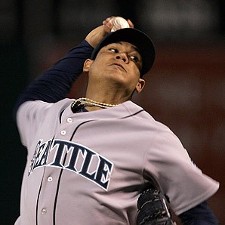
For example, I might think Felix Hernandez should be the A.L. Cy Young award winner and you might think it should be Zack Greinke, but there would be no right or wrong in the debate. The only opinions that would mean anything would be those of the 28 voters.
