I. A question (which just won’t quit):
If Major League Baseball, as its commissioner boasts at every opportunity and then some, has the toughest, strongest, best testing program in all sports to combat performance-enhancing drugs, why was Alex Rodriguez able to elude detection of his alleged use for “multiple years,” to use the commissioner’s phrase?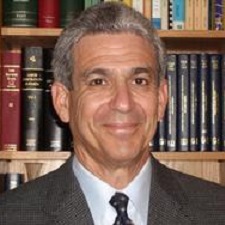
II. A prediction (I am not big on making predictions, but I like this one’s chances of being right):
Frederic Horowitz will join Raymond Goetz, Richard Bloch, George Nicolau and Shyam Das in the ranks of baseball’s impartial arbitrators who have overturned or reduced player suspensions for off-field transgressions.
Horowitz is the arbitrator who will hear Alex Rodriguez’s appeal of his 211-game suspension for allegedly violating baseball’s drug-testing program. Major League Baseball says it has overwhelming evidence of Rodriguez’s guilt, but Horowitz will be the judge of that.
Commissioner Bud Selig was irate last year when Das, Horowitz’s predecessor, overturned Selig’s 50-game suspension of Ryan Braun for drug-testing violations. But irate is not the word for what the commissioner’s reaction would be if Horowitz overturns or even reduces A-Rod’s suspension.
I believe Selig took Braun’s appeal victory personally, and he would take a Rodriguez win of any sort just as personally. Other commissioners before Selig were irate over arbitrators’ rulings.
Fay Vincent was one.
In June 1992 Vincent banned reliever Steve Howe for life, only to have Nicolau allow the drug-plagued pitcher back upon his appeal of his seventh suspension. This was the world record holder for drug suspensions whom Vincent had given another chance two years earlier, and the arbitrator was letting him resume his career for the 1993 season. The lifetime ban had become an excuse-me half-season penalty.
Nicolau, who had served as baseball’s arbitrator for six years, longer than any of his predecessors, had bought the argument of Richard Moss, Howe’s lawyer, that he suffered from an untreated, “underlying psychiatric disorder” – adult attention deficit hyperactive disorder – that contributed to Howe’s cocaine addiction.
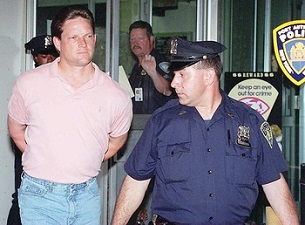 “It’s like saying you’ve had seven chances, but eight is the right number,” Vincent said at the time. “How can there be soundness in that judgment? That makes the whole thing a joke. Nicolau is saying he’s giving him one more chance. Well, I did that in ’89. What if a medical theory comes up after the next violation? It could excuse the next violation. Then there would be more chances. It’s a daisy chain. You never get to the end of it.”
In his argument before Nicolau, Moss used a contemporary theory that suggested that a hyperactive condition, which Howe said he suffered from, prompted the use of cocaine because the drug somehow alleviated the hyperactivity.
I wrote at the time that it sounded like something out of “West Side Story,” where a juvenile delinquent tells Officer Krupke, among other things, he’s depraved because he’s deprived and he should see a social worker because he has a social disease.
Whether Rodriguez’s lawyers can be as creative remains to be seen, but what is more to the point is Nicolau’s ruling that Vincent did not have just cause to ban Howe permanently.
Arbitrators seem to base many of their decisions, where applicable, on precedent. If it’s never been done, they’re not going to be the first to do it.
As far back as 1980, an arbitrator, Raymond Goetz, lifted Bowie Kuhn’s indefinite suspension of Ferguson Jenkins for his arrest in Canada for cocaine possession after only 13 days. That was just the start of Kuhn’s difficulty with arbitrators in drug suspensions.
In December 1983, ruling in the appeals of Kansas City players who had entered guilty pleas to attempted possession of cocaine, Richard Bloch commuted one-year suspensions of Willie Wilson and Jerry Martin (though not Willie Aikens) to May 15, 1984. Kuhn, the commissioner, subsequently commuted Aikens’ suspension to May 15.
A month earlier Kuhn suspended Pascual Perez through May 15 following his arrest in the Dominican Republic for cocaine possession, but the pitcher filed a grievance, and Bloch lifted the suspension April 29.
It was Peter Ueberroth’s turn to be overturned in 1987. He suspended LaMarr Hoyt for that season for drug-related matters, but Nicolau commuted the suspension to 60 days.
Before the 1992 season Vincent suspended Gilberto Reyes for 60 days for a positive test, but Nicolau ruled April 3 that the Montreal catcher should be treated as a first-time offender with no penalty and lifted the suspension.
The Anaheim Angels suspended Tony Phillips indefinitely Aug. 18, 1997, after he was arrested and charged with cocaine possession, but he filed a grievance, the case was heard two day later and Bloch ruled for Phillips, ending the suspension immediately.
This history doesn’t mean Rodriguez will win his grievance and avoid suspension altogether, and suspensions have been upheld. But Bud Selig’s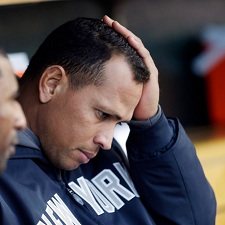 lawyers will have to do a heck of a selling job to convince Horowitz a 211-game suspension is warranted. It’s more likely that the arbitrator will reduce the number of games, perhaps to a season, maybe fewer than 162.
Besides the unprecedented number of games, union and Rodriguez lawyers will most likely challenge Major League Baseball’s evidence and its credibility. Baseball, remember, paid for the evidence, buying it from Tony Bosch, the owner and operator of Biogenesis and himself a crook, dealing in and distributing illegal drugs.
And baseball will have to deal with the fact that Rodriguez never tested positive for banned drugs in the “multiple years” Selig has cited.
Oh yes, about those tests. Why didn’t Selig’s vaunted, self-proclaimed toughest tests nab Rodriguez? The commissioner, as far as I know, hasn’t answered or explained that matter. I, for one, am intrigued by the question and would be happy to hear an answer. Maybe it will come up in the Horowitz hearing.