At the age of 78, Jerry Reinsdorf very likely doesn’t have a lot of time left as chairman of the Chicago White Sox and an influential owner in Major League Baseball. That means if he has any unfinished business, if he wants to accomplish something dear to him while he has time, he has to act quickly. And boy does he have something he wants to accomplish.
He doesn’t talk about it, but his actions betray his silence. Despite the battering the owners took in the 1994-95 strike and the severe damage it did to Major League Baseball, Reinsdorf apparently wants to revisit the issue that the owners fought the players over in 1994 and ’95.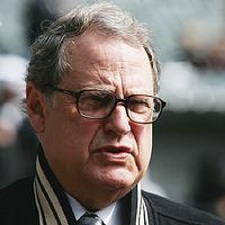
Curious about Reinsdorf’s reported opposition to Bud Selig’s desire to have Rob Manfred, MLB’s chief operating officer, succeed him as commissioner when he retires next January, I asked several people why they thought Reinsdorf opposed Manfred.
“This is all about Jerry,” said a lawyer who is closely connected to Major League Baseball and many of its owners. “He wants to protect his own power. He floated an idea of not having a commissioner but a three-man panel, which would include him. Or he should be interim commissioner like Bud was.”
Reinsdorf, through a White Sox spokesman, has denied that he proposed or favors those ideas. But either idea would enable Reinsdorf to remain in a position of power or influence, which he has enjoyed in Selig’s 22 years as commissioner.
However, for Reinsdorf to achieve what he wants he has to undermine what his buddy wants, no less at the expense of Selig’s legacy, which Selig cherishes above all else as he eases into retirement. Why does Reinsdorf oppose Manfred?
“He thinks Rob isn’t tough enough in labor,” the lawyer said. “He feels the union can be made to accept a salary cap.”
Baseball personnel and fans should find that thought probably the most frightening anyone could suggest for baseball. The owners’ attempt to gain a cap in 1994 produced the disastrous strike and cancellation of the World Series and left the game wobbling for a couple of years.
Selig, who with Reinsdorf led the ill-conceived charge for a cap on payrolls, has at least acknowledged that he learned from the debacle. Reinsdorf obviously cannot echo that statement; nor apparently does he want to.
Reinsdorf remains stuck in the payroll cap rut. Having won a World Series championship in 2005, what is left undone for Reinsdorf? Ignoring the danger that he may be creating the baseball version of “Groundhog Day,” he wants to revisit history, rewrite it and emerge with a different ending. He is the worst kind of loser.
What bothers me, though, is if he really sees an opening, I can understand his thinking.
The union is not the same union Selig and Reinsdorf confronted in 1994 after forcing Fay Vincent out as commissioner. In Reinsdorf’s thinking, Manfred would be the new Vincent, a commissioner who would stand in the way of the militant owners’ desire to force the union into submission.
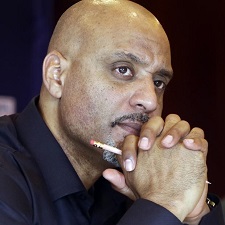 Reinsdorf and a few other militant owners see the union in a weakened position. Its executive director, Tony Clark, and the general counsel, David Prouty, have no strike or lockout experience. As a player, Clark was a union member, but he began his major league career in September 1995, after baseball’s last work stoppage.
Because the union and the clubs have negotiated three consecutive labor contracts without a work stoppage, the players have no strike experience. In addition, they make so much money, the militant owners figure, they won’t want to strike and give it up.
Clark has acknowledged that one of his biggest and toughest jobs will be to educate the players, but he is confident he will be able to do what needs to be done. In addition, Clark is the union’s first executive director with no previous labor experience.
Manfred, who had developed a good relationship with Michael Weiner, the union leader, who died last November, is in a curious position. As the owners’ chief labor executive, he has been largely responsible for the unprecedented two decades of labor peace that Selig justifiably likes to herald.
Reinsdorf, however, apparently doesn’t see that development as a Manfred strength. He hasn’t declared this publicly, but in his view Manfred’s ability to negotiate successfully with the union must mean he has become too close and too soft with the union.
Manfred, Reinsdorf has seemingly concluded, is not the man to lead the owners into a war over a payroll cap nor would he have the stomach or the desire to play that role.
Does Reinsdorf have a candidate?
“First he tried Brosnan and that’s not going to happen,” said a high-ranking baseball executive. Tim Brosnan is MLB’s executive vice president for business. Reinsdorf’s latest candidate?
“He’s the guy promoting Iger,” the executive said.
That would be Robert Iger, head of the Walt Disney Company. A few weeks ago the New York Post’s Page Six led the gossip page with an “exclusive” report that Iger “could be next MLB commissioner.” Iger, the report said, “is a favorite of the league’s succession committee.”
It also said that to be elected a candidate will need votes from 24 of the 30 owners. If the Post’s reporting is as good as its math (the required 75 percent is 23 votes, not 24), Iger won’t be getting the job.
The Post, however wasn’t the only newspaper promoting Reinsdorf’s candidate. A few days later The New York Times reported that “Disney executive gains supporters.”
Iger, however, has a problem even before he is nominated. His contract with Disney runs through June 30, 2016; Selig’s contract expires Jan. 24, 2015. It wouldn’t surprise me, though, if that time gap played into Reinsdorf’s thinking in promoting Iger.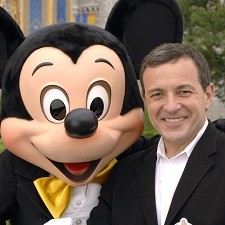
If the owners wanted Iger to succeed Selig, they could elect him effective the day he leaves Disney. In the 17-month gap, in Reinsdorf’s ideal thinking, Reinsdorf could serve as interim commissioner.
The timing would be perfect for Reinsdorf’s plan. The basic agreement expires Dec. 1, 2016, meaning negotiations would begin before Iger would take office and while the interim commissioner was calling the shots. What a potential disaster that would be.
It was after the last labor dispute that Reinsdorf demonstrated his style of operation. It’s not one for all and all for one, as the Three Musketeers practice, but one for one, and only one.
The players had struck for 234 days, Selig called off the 1994 World Series and it took a federal court injunction, issued by Judge Sonia Sotomayor, now a justice of the United States Supreme Court, to induce the players to return to work.
The owners and the players still had to negotiate an agreement, and Randy Levine for the owners and Donald Fehr for the players accomplished that shortly after the 1996 World Series. The owners, though, rejected the agreement by an 18-12 vote at a meeting Nov. 6.
Three weeks later, at another meeting Nov. 26, the same owners approved the agreement by a 26-4 vote. In between those meetings, Reinsdorf enraged his fellow owners by signing free-agent Albert Belle to what was then a record 5-year, $55 million contract.
Here was the owner most vehemently pushing for a payroll cap, and he was signing a player to a record contract. There was some thought at the time that he did it out of spite for the owners who opposed his position. Whatever his reason, Reinsdorf incurred great wrath among other clubs:
Andy MacPhail, Cubs, on their Sammy Sosa contract: ”We weren’t interested in any five- or six-year contract. We were willing to make a concession on the average annual value to keep it four.”
Dave Dombrowski, Tigers, on their Gary Sheffield signing: “It had a tremendous impact; there’s no question. They didn’t want to talk at all until Belle signed. Once the Belle numbers came in, they were very open to talk. I said this might be an aberration. Then the Bonds numbers came in and the market was defined. So it had a tremendous impact.”
Doug Melvin, Rangers, on their Ivan Rodriguez contract: “The whole negotiation was ‘if Belle, Sheffield and Sosa can get $10 million,’ That’s what we were faced with.”
Reinsdorf’s response? ‘We’re not being fiscally irresponsible because we can afford it.” He also was quoted as saying, ”Actually, it’s good for the White Sox because it dooms the small-market teams. There will be less for us to compete against.”
This is the man who wants to go to war with the union – again?
This is the man who wants to be in control of Major League Baseball?
“This is shocking,” said one of the people I talked to about the Reinsdorf initiative. “Bud is upset.”
Selig has reason to be. He likes things to run smoothly to the extent that he always knows what the outcome of an owners’ vote will be before he conducts the vote.
“I think Rob has the votes,” said the lawyer who spoke earlier. “All the teams like Rob and respect him.” The Reinsdorf group, he added, doesn’t have the eight votes needed to block a candidate’s election.
.500 OR BUST
Not all teams have won-loss records of .500 or close to it. It just seems that way. At the start of the week (Sunday morning) the Indians and the Rangers were at .500; the Yankees, the Cardinals and the Dodgers were one game over .500, the White Sox were one game under .500; the Orioles, the Nationals and the Marlins were two games over .500 and the Royals and the Twins were two games short of .500.
Looking at the entire season, according to Elias Sports Bureau, teams have had .500 records 191 times. In the equivalent time last season, teams had .500 records 100 times.
MATTINGLY NEEDS CHEMISTRY COURSE
Jim Frey had the best observation I ever heard on team chemistry.
“Give me a three-run homer,” said Frey, who managed the Royals and the Cubs in the 1980s, “and I’ll show you good team chemistry.”
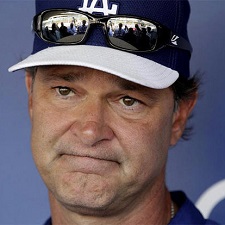 The subject came up last week when Don Mattingly mentioned it in an interview with ESPNLosAngeles.com. “Don Mattingly: Chemistry at issue,” the headline read.
The Dodgers began Sunday’s game at Colorado only one game over .500 (32-31) and the largest second-place deficit (9 ½ games) in the majors, not a pretty picture for a team with a $235 million payroll, highest ever in the majors.
“It may be a day here or a day there, but it hasn’t felt like a true team at this point….,” the Dodgers’ manager said.
I have never been sold on Mattingly as a manager. That he is the manager of the Dodgers is due to Joe Torre. When Joe Girardi (on whom I am sold as a manager) beat out Mattingly for the Yankees’ job, the former first baseman joined Torre in Los Angeles. He was there when Torre retired, and the Dodgers made him their manager even though he had never managed anywhere.
In the interview last week, Mattingly blamed a lack of cohesion for the Dodgers’ troubles. But isn’t it the manager’s responsibility to turn his team into a cohesive unit? Isn’t it the general manager’s responsibility to get players who fit with each other and form a cohesive unit with good team chemistry?
Certainly there are instances where selfish players undermine cohesiveness. The ESPN article cited one such case with the Dodgers. Matt Kemp is reportedly unhappy that he had to take his $160 million contract to left field when he had always played center.
This sort of problem can be viewed in two ways: either Kemp is being paid so abundantly that he should happily move if asked, or his contract gives him the status to reject a move.
My first experience with that kind of situation was in 1974 when Bill Virdon became the Yankees’ manager and switched Bobby Murcer to right field and put Elliott Maddox in center.
Virdon, who had been an outstanding center fielder himself, was clearly right in his judgment of Murcer and Maddox, but Murcer was the Yankees’ star at the time and was insulted at being made to move out of center, where the Yankees had touted him as being next in the line of Joe DiMaggio and Mickey Mantle.
Murcer never forgave Virdon during his playing career, but the manager actually did him a favor because he was better suited to right and wasn’t subjected to criticism for mistakes he might have made in center.