In the aftermath of the outing of Alex Rodriguez as a steroids user, a union official, Gene Orza, has become the No. 2 villain to A-Rod’s No. 1.
Sports Illustrated’s Web site, SI.com, especially singled out Orza, the union’s chief operating officer, accusing him of committing dastardly acts by notifying players, in violation of the union’s labor agreement with the commissioner’s office, when they were going to be tested for performance-enhancing drugs.
The SI.com article, which appeared a week ago, cited the Mitchell report as saying that Orza tipped off an unnamed player about an “upcoming, supposedly unannounced drug test.” In addition, the article said, three major league players “who spoke to SI said that Rodriguez was also tipped by Orza in early September 2004 that he would be tested later that month.”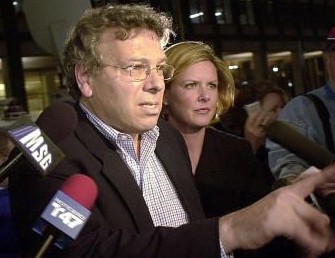
Other news media reports quickly picked up on Orza’s alleged role and made him out to be as much a cheater as the players who used steroids. The New York Times went further, suggesting in an article that Orza’s action had created “a growing rift” between the union and the commissioner’s office.
The Times report quoted an article in Sports Illustrated magazine that in the same month (September 2004) Orza allegedly alerted Rodriguez to an upcoming test, he warned an unidentified player that he would be tested on Sept. 24 “so make sure there’s nothing in your system.”
The Times report said the commissioner’s office might file a grievance against the union and that there was a “growing hostility between the two sides after years of relative labor peace.”
The Times’ story was overblown, people on both sides said, and they didn’t expect a grievance to be filed. Furthermore, people on both sides said, no one had asked a question central to the whole matter:
If Orza knew specifically when players would be tested, how did he know? Who told him? If anyone on either side knew, how would he have learned the date?
The laboratory doing the testing made up the schedule. Was it going to tell anyone when a particular player would be tested? If the lab did tell someone about an upcoming test, its business wouldn’t be worth the samples in its urine bottles.
Orza and Donald Fehr, the union’s executive director, had not directly addressed the issue all week except for Fehr’s denial in a statement last Monday evening that neither Orza nor any other union official had alerted anyone to an upcoming test. On Saturday, however, both Orza and Fehr responded to questions in telephone interviews.
“I’m just disappointed,” Orza said, “that no one has asked themselves how would I get this information. If I was telling people when they would be tested, how would I know? What investigation has anyone undertaken on that question? Major League Baseball knows there’s no way I would get information like that.”
Fehr noted that “the only allegations we’ve had” on tipping off a player about an upcoming test concern 2004 tests. He said that in his 2007 report George Mitchell made a similar allegation about Orza.
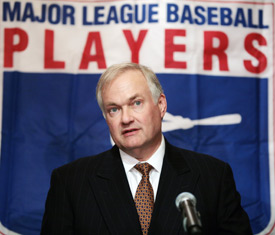 “We said tell us what it is and we’ll investigate it,” Fehr said, “but he didn’t tell us anything. We have never had any information about who was alerted and what they were told. As far as I know, nobody knew who was going be tested except the testing people at C.D.T. We’ve never been able to figure this out.”
Rob Manfred, the commissioner’s chief labor executive, opted not to join the discussions, declining to comment on any aspect of the issue.
There is a plausible explanation for the players’ recollections if indeed they recalled being told when they would be tested or thinking others had been told when they would be tested.
At the time of the 2004 tests, players were actually being tested twice each, a second time about a week after the first. To avoid false positives, the two sides agreed that players would be told to stop taking, after the first test, any supplements they might be using in case any of them were tainted with illegal substances.
“If you’re taking supplements,” one official recalled they were told, “stop in case they’ll get you tested positive.”
The player knew – legally – when he would be tested the second time, and the player who recalled Orza telling him to “make sure there’s nothing in your system” could have been remembering Orza telling him not to use any supplements in the ensuing week, which also would have been permissible.
“People are just confusing the basic agreement,” Orza said, referring to the labor document. “The 2004 basic agreement said players would be tested twice within seven days. That’s not giving notice.”
Players are not the most accurate reporters of what they were told years earlier and could easily confuse what they were told legally with what they thought they might have been told illegally. In the words of Roger Clemens, the players might have misremembered.
Making a Bad Week Worse
Last week was not a good week for Commissioner Bud Selig and not for the reasons he thought it was a bad week.
“This breaks my heart,” Selig said in a telephone interview a few days after the Alex Rodriguez episode. “This has been a very tough week.”
But Selig made it worse. He issued a self-serving statement that was over the top, and he made some foolish comments in an interview with USA Today, saying he would consider taking disciplinary action against Rodriguez and altering the record book to account for steroids-aided achievements.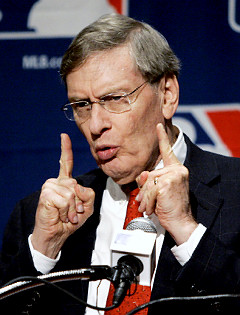
Selig could attempt to suspend Rodriguez, but he would have no basis for such action. Rodriguez admitted to using performance-enhancing substances in 2001 and 2002, when baseball had no agreement with the union, and in 2003, when the new testing agreement called for anonymity and no penalties for testing positive.
Furthermore, Selig did not penalize Jason Giambi when he met with the commissioner two years ago and talked abut his steroids use. Precedent goes a long way in baseball grievance matters, and telling the arbitrator Giambi was threatened with suspension if he didn’t talk to Mitchell wouldn’t do much to change the precedential nature of Giambi’s experience.
As for baseball’s records, Selig has repeatedly said he wouldn’t mess with the records.
One reason, he has said, is once you start amending or altering the record book, where do you stop? If, for example, home runs are taken away from Barry Bonds and Rodriguez, what happens to the records of pitchers who threw the pitches they hit for home runs?
What do you do with the outcome of the games in which they hit the home runs? Would you revise the standings? Would you strip a team of a division title, a World Series championship?
If he begins playing with home runs, which is the only thing most people care about, Selig would open up more loopholes than he could possibly close. If he suspends Rodriguez, the arbitrator will knock him through the nearest hole.
But if Selig wasn’t going to suspend Rodriguez and he wasn’t going to change the record book, why did he say he might do both?
“He can’t say no to Christine Brennan,” one official said, referring to the USA Today columnist who interviewed him.
Radomski to Mitchell to Selig
 In his statement last week, the commissioner again praised George Mitchell for his report on the use of performance-enhancing substances in baseball.
“Although Senator Mitchell received no cooperation from the Players Association and virtually none from the players,” Selig said, “he demonstrated that the use of such drugs was prevalent through the late ‘90s and the early part of this decade.”
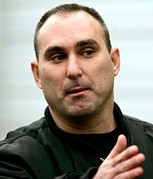
But where would Mitchell have been without Kirk Radomski? Mitchell had nothing without Radomski, and he wouldn’t have had Radomski (at left) if the United States attorney’s office in San Francisco hadn’t forced him to talk to Mitchell. Selig could have dealt directly with Radomski, cut out the middle man and spent a lot less than $25 million.
Turning in Their Own
Once upon a time, in the first half of the ‘80s, baseball had a joint drug testing program. But steroids weren’t the drug of testing choice. Cocaine was.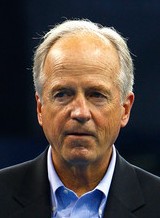
Peter Ueberroth was the commissioner, but he was unable to secure the kind of agreement he wanted. When the union rebuffed him, he bypassed the union and sent letters directly to the players, appealing for their acceptance of his program. They rebuffed him, too.
As a result, during the 1985 World Series, the owners unilaterally killed the agreement, which was their right. The owners killed it because they didn’t like the way the program worked.
Under the program the testing was done only for probable cause. Someone had to suspect that a player was using illegal drugs and call him to the attention of an impartial panel of three doctors. The doctors would interview the player and decide if he should be tested. If he tested positive, disciplinary action and more testing would follow.
The owners didn’t like the idea of turning in their own players. As one official said, “What were you supposed to say, my guy has hit too many home runs?”
Minaya Shouldn’t Plan Vacation in Venezuela
 For anyone who thought owners were baseball experts, what about presidents of countries? Hugo Chavez, the president of Venezuela, has criticized the Mets for not allowing Johan Santana to pitch for Venezuela in the World Baseball Classic.
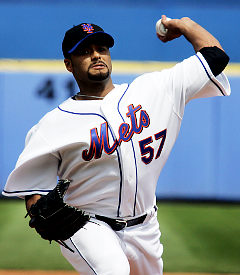


Santana wants to pitch for his country, and Omar Minaya, the Mets’ general manager, is a big supporter of the Classic. But Santana is coming back from knee surgery, and Minaya doesn’t want him to pitch competitively before his knee is ready. Pitching on a less than sound knee could lead to arm trouble, which the Mets don’t need with their No. 1 starter going into the season.
Anyway, Santana’s $137.5 million contract is with the Mets and Minaya, not with Venezuela and Chavez.
Manny vs. Dodgers, Extra Innings
The most intriguing game of spring training, which began this weekend with pitchers and catchers starting their workouts, will come not on any of the Florida or Arizona fields but on the telephone with Ned Colletti, the Dodgers’ general manager, on one end and Scott Boras, the agent, on the other.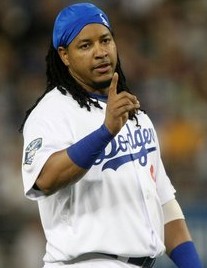
Boras represents Manny Ramirez, who does not have a job even though the Dodgers want him back. Ramirez, who apparently prefers playing for the Dodgers, whom he propelled to the playoffs last August and September, has rejected the team’s multiple offers.
He wants more years than the Dodgers have offered – first two, then one – but the Dodgers don’t want to give him what he wants. If there are any other teams ready to pounce, they haven’t made their presence known.
If Ramirez is to rejoin the Dodgers, they or he will have to concede to the other’s wishes or figure out a compromise. At this time whatever results will come from one side waiting out the other.
The Dodgers need a power hitter. Ramirez needs a job.
Had Ramirez not played himself out of Boston, he would be very likely on his way to Fort Myers, Fla., for his ninth year with the Red Sox, who most likely would have exercised the first of his two $20 million options. But Ramirez wanted out of Boston, and from the way he made that known the Red Sox were happy to let him leave.
After Manny’s two-month performance in Los Angeles (.396, 17 homers, 53 runs batted in, .743 slugging percentage and .489 on-base percentage), Boras expected someone to give Ramirez $25 million a year for four or five years. Can you spell m-i-s-c-a-l-c-u-l-a-t-i-o-n?
