The idea is too novel to expect most people to accept it, but I will make the attempt anyhow. Major League Baseball players have made mistakes, stupid mistakes as Alex Rodriguez has said, and Major League Baseball has made mistakes.
Can we all agree on those two statements? I think so. But steroids have caused enough problems and done enough damage. We can dwell on steroids past and wallow in each new revelation until we are so consumed by steroids that they smother us, if they haven’t already.
Is it time to look forward to a better day in and for baseball? Should we look at its positive developments? Are there positive developments that signal a steroids-free future, developments on which to base yet another rebirth, the kind we thought we were seeing in 1998, two years after the disastrous 1994-95 labor dispute was settled?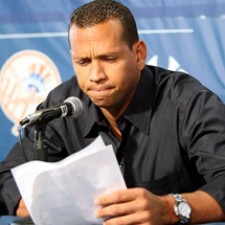
The dispute between the owners and the players angered the fans, induced some to vow never to return to the ball parks, and when play resumed some fans stayed away. In 1996, the first full season in three years, attendance was off 10 million from the last previous full season, 1993.
Attendance in 1997 rose 3 million over 1996, but the increase wasn’t nearly enough for the attendance to approach the 1993 total. Then came Mark McGwire and Sammy Sosa and their thrilling home run race in 1998, and fans’ interest in the game was resuscitated and re-energized.
Excitement and interest stirred in fans, and they flocked to games in steadily increasing numbers until they set a record in each league and in the major leagues in 2007 with an attendance of 79.5 million.
By 2007, fans knew that steroids had played a part in baseball’s rebirth. George Mitchell had spent the entire 2006 season investigating baseball’s steroids past, and his probe carried through the entire 2007 season. But fans flocked to ball parks nonetheless. A labor war threatened baseball, but steroids didn’t.
So will the outing of Alex Rodriguez as a steroids user have a severely negative impact on fans’ interest in baseball? Not very likely, not even in New York, where Yankees’ fans will shrug off his cheating, say he did that when he played for the Texas Rangers and hasn’t done it since he joined the Yankees five years ago. Even if they were tempted to shake their heads and say shame, they won’t.
They will root for the clean A-Rod to power the Yankees to the playoffs and this time produce in post-season games. That’s right. Yankees’ fans are more upset at Rodriguez’s post-season failures than his human failure.
Perhaps everyone should be like Yankees’ fans. What happened in the past happened in the past. Rodriguez and the other 103 players who tested positive in 2003 are part of the game’s steroids history, but do we have to know who those players were and wait for them all to retire before the game can be declared safe to watch again?
Must we shield children’s eyes when games are on television to prevent them from being struck dumb and blind by the tainted players they might see on the screens in their living rooms?
Baseball has tested players for five years since the anonymous testing in 2003 that ensnared Rodriguez and his 103 colleagues. In those five years, 27 players have incurred suspensions for using performance-enhancing substances, steroids or amphetamines, which by the way are those little pills known affectionately among players as greenies and were clubhouse staples for decades known to owners, general managers, managers – and commissioners (Bud Selig fits into those categories twice).
But let me emphasize the number of suspensions – 27 out of approximately 7,200 players tested. That computes to less than 4/10ths of 1 percent. If baseball’s steroids program wasn’t working in 2003, can we agree that it’s working now?
Surely the steroids zealots – Dr. Gary Wadler and his buddies – won’t agree. In their eyes, steroids were rampant in baseball because baseball didn’t have a plan to counter them, and now that they have a testing program that has drastically curtailed use among players, it’s not good enough because it doesn’t catch enough players. Really, these people have actually said that.
But if reasonable people can agree that baseball’s program appears to be working, there are not likely to be any more A-Rod cases. Those 104 players, including Rodriguez, might have been stupid in 2003 because they triggered regular testing for everyone, but they aren’t going to be stupid now and get themselves suspended for 50 games.
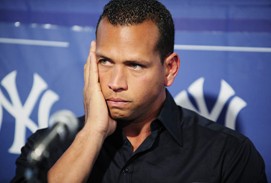 Rodriguez said he used a steroid from 2001 until he stopped using in spring training in 2003. Because he is who he is, not everyone believes him. Most of the news media don’t like him. They don’t like his personality; they don’t like the way he tries to come across as a perfect person. They think he’s phony.
I suppose Rodriguez has only himself to blame for that perception, but some members of the media go too far, refusing to believe anything he says. One television station, WNBC in New York, had a psychotherapist watch Rodriguez’s news conference Tuesday and carried her comments on its news show. Most of what she said was critical of Rodriguez, mostly questioning his sincerity.
But why does anyone have to question his sincerity? He said he was sorry for what he did and said it was wrong. What more do we need? Does he have to open his veins and bleed an apology? If he had apologized but not said what he was apologizing for, like Jason Giambi did four years ago, the media would have crucified him.
When he turned to thank his teammates for their support and couldn’t speak for more than half a minute, he seemed close to tears. But if he had cried, he would have been accused of being calculating.
In his initial interview last week with Peter Gammons of ESPN, Rodriguez was criticized for not saying who gave him steroids. In his Tuesday interview, he said his cousin gave him steroids and injected them twice a month for six months each year. But he declined to give his cousin’s name and was criticized for that. But why should he have named him and opened him to possible legal charges because he brought the steroids into the country from the Dominican Republic?
Some criticized the format of the news conference for not allowing follow-up questions, but Jason Zillo, the Yankees’ media relations director, explained before it began there were too many reporters to have them ask follow-up questions. That seemed reasonable to me.
If there’s anything I would question about Rodriguez’s effort, it is that he made too much of his youth and immaturity as the explanation for his decision to use steroids. By the time he said he began using steroids, in 2001, he had played in the major leagues for five years. That’s a career for most players. It’s also a lot of growing up time.
But most importantly, Rodriguez has admitted using steroids and has apologized for it. That’s far more than Mark McGwire, Barry Bonds, Rafael Palmeiro, Sammy Sosa and Roger Clemens have done.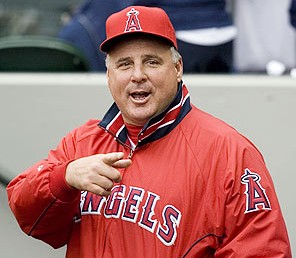
Furthermore, it’s fair to believe that Rodriguez stopped using steroids when he said he did. Along with all other players, he has been tested for the past five years for baseball, and in 2006 he was blood tested for the World Baseball Classic. That test included human growth hormone so it’s safe to say Rodriguez wasn’t using that illegal substance. He will be tested again for this year’s classic.
The media will continue to chase the Rodriguez steroids story, and his cousin will probably be the most pursued person since John Dillinger. But I would recommend they listen to and heed a comment by Mike Scioscia, the Angels’ manager:
“I just think it’s time to move on, move forward and focus on the game on the field. Let’s put this chapter behind us and turn the page.”