Pete Rose, Paul Molitor, Ryan Braun.
Do these two former players and one current player have anything in common? Do I have any reason to link them here?
I link them because they have all recently said or had things written about them that deal with baseball’s most sinister scourges of the past 35 years – P.E.D.’s, gambling, cocaine: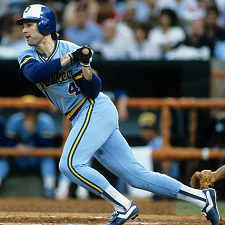
- Braun used performance-enhancing substances and incurred a pair of suspensions, one for 50 games, which an arbitrator overturned, and one for 65 games, which he accepted in silence and shame.
- Rose bet on baseball games and accepted a lifetime ban from the game.
- Molitor used cocaine early in his career and was elected to the Hall of Fame in spite of it, unlike steroids’ users of the past two decades.
It was a couple of interviews Molitor did recently on Alex Rodriguez and his 2014 suspension and the Hall of Fame that got me thinking about Molitor and cocaine. In 1985, Molitor’s name came up in reporting that Michael Goodwin and I did for a four-part series on cocaine in baseball for The New York Times.
“I don’t think he was overly targeted by Major League Baseball,” Molitor told the Toronto Sun. “I didn’t think they would impose such a severe suspension. I know that there was not a positive drug test, but there was just cause. So, no, I don’t think he belongs.”
In another interview, on Milwaukee radio station WTMJ-AM, Molitor said, “For me personally, it brings back times when I had my own troubles, how difficult it was, the embarrassment, the remorse. I know it’s tough. As far as the fans are concerned, Milwaukee fans feel a personal connection with their players. If you’re playing for us, you’re one of us. There’s a lot of disappointment.
“Anytime you get busted, if you will, if your weaknesses become public, you have a tendency to only acknowledge things as they come out, instead of trying to get out in front of it. In hindsight, from the beginning, I wish I had been more honest about some of the problems I had with recreational drugs.”
Molitor was inducted into the Hall of Fame in 2004, well after a drug dealer, Tony Peters, testified at his 1984 trial that Molitor was one of the Milwaukee Brewers players who were his cocaine customers. Molitor’s career began in 1978, and he was using cocaine and marijuana by 1980.
Ron Simon, Molitor’s long-time agent, also wrote about Molitor’s cocaine use in his 1993 book, “The Game Behind the Game.” Molitor, who racked up 3,319 hits in his career, has said he stopped using cocaine in 1981, at least partly because his future wife, Linda, threatened to leave him if he didn’t.
I wanted to get Molitor’s view on cocaine in relation to steroids but was unable to reach him. Dustin Morse, the Minnesota Twins communications director, said last week Molitor, a Twins’ coach, was traveling out of the country and this week didn’t return telephone and e-mail messages.
The popular view is that steroids can enhance a player’s performance while cocaine can be debilitating and undermine it.
“I think there’s a difference between cocaine and P.E.D.’s, but I don’t think the difference should be the Hall of Fame,” Fay Vincent, the former commissioner, said. “People who use illegal drugs should not be elected to the Hall of Fame. I wouldn’t be supportive.”
Cocaine was popular among players in the ‘80s, and Major League Baseball and the Players Association had a joint program to deal with it and treat it. However, testing was not random but for cause and clubs had to initiate it by reporting their own players.
The clubs didn’t like being in that position and, as was their right, they unilaterally killed the program on the day of the last game of the 1985 World Series.
The drug of choice for the past 20 years or so has been steroids and other performance-enhancing drugs. Baseball boasts of having the strongest testing program, but the players’ drug scientists are better than the tests. Otherwise, how did Tony Bosch’s concoctions for Rodriguez and other clients beat the system?
 Braun, though, didn’t beat the system. He was nabbed in 2011 but escaped a 50-game suspension on a flaw in the collection system. He was nailed again last year by the Bosch documents that baseball bought and this time succumbed to a 65-game suspension, which ended with the end of last season.
He strongly denied substance use in the first instance, but this time, he has reacted as if he had heard Molitor’s advice.
“I don’t ever know if I could apologize enough for what’s occurred, you know? I just continue to move forward and obviously I’ll be apologetic,” Braun said at a recent Brewers’ function.
“I wish I could go back and do things differently, but I can’t. All I can do is move forward and make the best of the opportunities presented to me.”
The slugging outfielder, the 2011 National League most valuable player, has made private apologies as well as his public comments. He said he thinks he has called every suite holder and many season ticket holders.
As for Rose, if he were to apologize to everyone he lied to during his gambling episode, he wouldn’t have enough days left in his life.
Why has Rose resurfaced? A Sports Illustrated editor has written a new book about him, and all I can say is does the sports world or the literary world need a new book on Pete Rose?
The only new book I would like to see is by an assortment of authors titled “Lies Pete Rose Told Me.”
Rose lied for 15 years, beginning with his Feb. 20, 1989, meeting in New York with Commissioner Peter Ueberroth and Commissioner-elect A. Bartlett Giamatti. In a highly unusual move, they had summoned him to New York from the Cincinnati Reds’ spring training site in Plant City, Fla.
They asked him about gambling in general and gambling on baseball in particular. He lied and denied knowing anything about gambling.
Rose, the Reds’ manager, told his first public lie to me the next day after he returned to the Reds’ camp.
A person who knew of the meeting told me the subject was Rose’s gambling, but Rose denied that gambling was involved. ”That’s not the reason,” the manager said, kneeling on the grass in foul territory on one of the team’s spring practice fields.
Rose, however, declined to offer an alternative reason. He and others involved in the meeting spoke only of ”advice” Ueberroth sought. That line apparently was the one Ueberroth decided all would use for public consumption.
”He asked me to come there,” Rose said, referring to Ueberroth. ”He and Giamatti were both there. They wanted my input and advice on a couple things. I gave it to them; it took an hour. I left, and that was it.”
Asked if the meeting could have bad implications for him, Rose replied, ”You can read anything you want into it, but I don’t see anything bad. I’m an Unusual Guy.”
Asked if it was unusual for him to be summoned that way and for the commissioner to solicit his ”advice,” Rose said: ”A lot of unusual things happen to me because I’m an unusual guy. It’s unusual to have two commissioners there.”
Rose proceeded to lie for the next 15 years, telling the truth only in a 2004 book he published. Even then, though, he lied by saying he never bet from the manager’s office whereas John Dowd’s solid investigative report demonstrated that he had bet many times from his office.
The new book, by Kostya Kennedy, seems to have been written with one purpose in mind – to urge the Hall of Fame to change its rules so that Rose, now banned from consideration, can have his name placed on a ballot so that some group of voters can decide if Rose should be in the Hall of Fame.
Had Rose not spent 15 years lying, if he had followed Molitor’s advice and told the truth immediately and not continued lying, by now he might have been reinstated and eligible for a spot on a Hall of Fame ballot.
In 1991, when the Hall’s board changed the rules to make sure Rose couldn’t slip into the Hall, saying no one on the permanently ineligible list, which Rose was, could be elected to the Hall, I was among the many writers who objected. Not that we wanted to vote Rose into the Hall, but we felt we should be able to make that decision.
As a result of the board’s action, I introduced a motion at a meeting of the Baseball Writers Association, that we terminate our voting relationship with the Hall. If the motion had been voted on at that meeting, I think it would have had a good chance of passing.
A Chicago writer, Dave Nightingale, saw the same possibility and shrewdly moved to table the motion so the full membership could vote on it by mail. That’s why the writers continue to vote.