When the Boston Red Sox were stymied in their attempt to hire their first choice as manager of the team for the 2012 season, they made a foolish and disastrous decision to hire Bobby Valentine despite warnings of the potential peril of taking that step. A last-place finish later, they fired Valentine and got their previously elusive first choice.
In a conference call this week, as a member of a committee delegated to choose the major league manager of the year as awarded by the Pittsburgh Rotary Club in honor of Chuck Tanner, I plan to vote for the Boston manager, John Farrell.
There are other strong candidates, but in my view Farrell is the strongest. In his first year with the Red Sox, he managed them from worst to first and back to the playoffs after a three-year absence.
Other worthy candidates include Terry Francona of Cleveland, whose unwarranted dismissal in Boston put the Red Sox on the road from worst to first. Also to be considered are Clint Hurdle of Pittsburgh, Ned Yost of Kansas City, Bob Melvin of Oakland, Fredi Gonzalez of Atlanta, Joe Maddon of Tampa Bay, Buck Showalter of Baltimore and Joe Girardi of the New York Yankees.
The best thing I can say about voting for the manager of the year is there are no new-age statistics that can be used to steal the award for one of the candidates. Maybe someday a genius sabrmetrician will come up with a formula, but fortunately the stat heads have yet to create a mathematical formula for judging the jobs managers do.
It is left to us shallow-thinking infidels to use our judgment based on whatever we base our judgment on.
A year ago the Rotary committee was unable to reach a consensus on a single winner and wimped out by naming two winners, one for each league, for the first time. We gave the award to Davey Johnson of Washington (National League) and Melvin of Oakland (American).
A similar result could occur this year, though it could no longer be considered an exception. I suspect that Hurdle will receive strong consideration, as he should.
Besides the case he makes for himself by the terrific job he has done with a perennial loser, Hurdle could gain an edge for this award by the fact that it is sponsored by an organization in the city in which he manages. I hope that doesn’t happen, but it could.
Putting the hometown factor aside, a strong case can be made for Hurdle. He has taken a team that was burdened with a history of losing – a record 20 consecutive years of losing – and managed it into a division race and, most likely, the playoffs.
Though the Pirates were not leading the National League Central at the start of Sunday’s games, they were only two games behind division-leading St. Louis and they had spent about a third of the season in first place.
 The Pirates weren’t necessarily expected to avoid losing season No. 21 let alone compete for the division title, but here they are and Hurdle is a primary reason.
Farrell was not saddled with the Pirates’ losing history when he took over in Boston, but three years of missing the playoffs and one year of Valentine are enough of a burden to overcome.
Farrell took a clubhouse rife with disharmony and full of bitterness that Valentine created and quickly brought it into a winning environment. In addition, as the team’s former pitching coach he restored the pitching staff to a winning bunch.
This season the staff sliced a run off its 2012 earned run average (4.70 to 3.74) and made life easier on the Red Sox hitters.
If, as Larry Lucchino, the club president, recently told me, Farrell was their first choice before they hired Valentine, the Red Sox brass deserves credit for wanting to make a smart move, but I don’t understand how club executives can blunder from wanting to make such a smart move to making a really dumb move.
Viewing the positive side of a bad decision, had the Red Sox hired someone other than Valentine, they might have played well enough and had a good enough season not to have seen the need to change managers and hire Farrell.
Now that they have Farrell, they also have a pitching staff that is capable of winning the World Series. To go from the sixth worst record in the majors to the World Series championship would be exceptional.
In rating managers and the jobs they have done in a season, I often consider the drawbacks they have had to overcome. Of my list of nine finalists, seven manage teams that place in the bottom 16 payrolls. Only Farrell and Girardi don’t.
Girardi has been mentioned as manager of the year because the Yankees have remained in contention despite a series of injuries to major members of the starting lineup. The Yankees, however, are always in better financial position to find replacements. If the front office doesn’t do a good job of finding those replacements, I don’t think Girardi should benefit in the assessment of how he has done his job.
On the other hand, I think any time Tampa Bay (28th on the payroll list) seriously contends for a playoff spot, Maddon has to be considered. Hurdle (Pirates 27th), Melvin (A’s 26th), Yost (Royals 22nd) and Francona (Indians 21st) are in the same financially challenged position.
I should probably include Gonzalez (Braves 18th) and Showalter (Orioles 15th) in that group, to be fair, though the latter two payrolls are appreciably higher than the others.
Are there managers who should not be considered for manager of the year? First on that list for me is Don Mattingly. I have read and heard people rave about the job Mattingly did beginning in June to turn the Dodgers’ season around.
But if Mattingly is to receive credit for the team’s successful part of the season, he also should be held responsible for the 30-42 start that made the turnaround necessary.
Four managers should be cited for their underperforming teams: Mike Scioscia (Angels), Davey Johnson (Nationals). John Gibbons (Blue Jays), Bruce Bochy (Giants).
MAGIC LOSERS
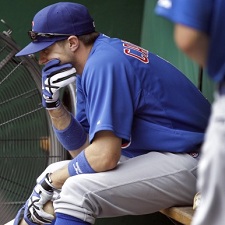 Magic numbers, which become popular at this time of the season, are generally used to determine the status of division races, how many games a first-place team has to win and/or how many a second-place team has to lose for a race to be over.
For current purposes, here is a different use: what are the magic numbers for the Chicago clubs to clinch last place in their respective divisions, and in the battle for the right to be called the worst team in the majors this season what is the magic number for Houston to clinch that distinction?
Entering Sunday’s games, the Cubs’ magic number was 5, the White Sox 4 and the Astros 3. Any number of losses for the Cubs, the White Sox and the Astros and wins for the Brewers, the Twins and the Marlins totaling those numbers would end those losers’ races.
NOTHING NEW IN LORIA’S DECISION-MAKING
A seemingly shocking report hit the baseball news cycle the other day. The Miami Herald reported that Jeffrey Loria, owner of the Miami Marlins, was making the team’s baseball decisions.
 I didn’t find that news so shocking because I have heard for years and have written that Loria makes the Marlins’ baseball decisions. Loria, who began in the baseball business owning and operating minor league teams, has long fancied himself a knowledgeable baseball man, even priding himself on his ability to judge baseball talent.
Larry Beinfest has been the team’s top baseball executive for 12 years. If he didn’t mind losing his job, he would very likely acknowledge that Loria makes the decisions. But he’s not talking. Neither is David Samson, the team president, who got his job through his mother’s marriage to Loria.
They are divorced, but Samson has retained his job and would like to continue doing it (it’s nice work if you can get it) so he’s not talking either.
Loria, an international art dealer, used to talk to me whenever I called him, but he hasn’t talked to me since I retired from my job with The New York Times. He, of course, would not acknowledge that he makes the Marlins’ baseball decisions, but it has long been known in baseball.
FREE SPEECH FOR PLAYERS
Occasionally the baseball commissioner or another league or club executive is criticized for not allowing a player freedom of speech. The critic is wrong, however, because freedom of speech applies to government, not private industry, which baseball is.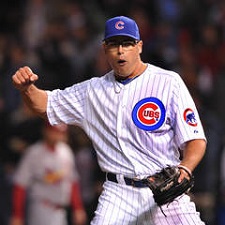
That doesn’t mean baseball, as well as all sports, shouldn’t grant players freedom of speech. Sometimes episodes occur where executives make themselves look foolish by taking disciplinary action or threatening to take action against a player who has publicly criticized the individual or the club.
Most recently Kevin Gregg, the Cubs’ closer, went on a public tirade against Theo Epstein, the team’s top baseball executive, because he thought he was being replaced as the Cubs’ closer despite his 32 saves in 34 save situations.
Hearing what Gregg had said to reporters, Epstein said he would consider disciplinary action. Speculation went further, suggesting that the Cubs might release Gregg.
As the situation developed, Gregg met with Epstein and manager Dale Sveum and apologized, saying he had misunderstood what he had been told. The next day Epstein announced that he accepted the apology and would take no action.
My question is why should a player be threatened with disciplinary action for criticizing someone, even his boss? It might be foolish because the boss presumably could take offense and action, but baseball bosses especially could afford to be more liberal and less uptight and accept criticism.
EVERYONE IN/OUT OF THE POOL
The Arizona Diamondbacks were offended and insulted last week when the Los Angeles Dodgers celebrated their division championship by jumping into the swimming pool at Chase Field.
It’s debatable who was right and who was wrong, but the Diamondbacks could have easily avoided the impromptu pool party and the dispute. All they had to do was win the game, and the Dodgers would have packed up their Champagne and limped on to their next stop, San Diego, where they would have celebrated on dry land.