When it comes to signing free agents, the New York Yankees don’t have to be geniuses. If you and I had the money, we could have signed CC Sabathia, Mark Teixeira and A.J. Burnett for $423.5 million in 2008. If we had the money, we could have signed Masahiro Tanaka, Jacoby Ellsbury, Carlos Beltran and Brian McCann for $438 million this off-season.
We didn’t even have to know they were good players. Plenty of people could have told us they were. We wouldn’t have had to sign the checks either. We would have had Hal Steinbrenner to do that.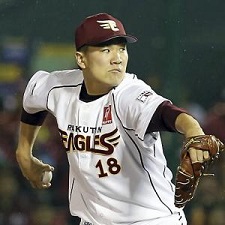
So what does the Yankees’ general manager have to do?
One thing Brian Cashman could have done in his 16 years as general manager – he celebrated his 16th anniversary the day after the Super Bowl – is build a productive minor league system.
Unlike the fallow system that the Yankees have now, that one would produce players good enough to make it unnecessary to try to fool the team’s fans into thinking they’re going to keep the payroll under $189 million this year so they can start over next year at the lowest luxury tax rate, 17.5 percent, instead of repeating the highest, 50 percent.
A baseball official familiar with the Yankees’ position on that aspect of the organization said the Yankees were not tolerating their shortcoming.
“They made a lot of changes this year,” the official said. “People whose contracts are up have been put on notice. It’s been a giant point of attention.”
I would like to have asked Cashman about his inability to build a decent, if not a terrific, farm system, but he did not return a voice-mail message left on his office telephone. Steinbrenner, the Yankees’ managing partner, didn’t return a call either.
When Steinbrenner’s father, George, was alive, he often questioned the ability of his employees, suggesting they succeeded because of where they worked, not the work they did.
When Gabe Paul left the Yankees after they won the 1977 World Series to join the Cleveland Indians as a part-owner, Steinbrenner remarked, “He was in baseball for 40 years, 25 as a general manager, and did he ever win a pennant before? You think he made all those moves with this team himself? You think all of a sudden he got brilliant?”
Steinbrenner could have made a similar comment about Cashman. He oversaw four World Series championship teams, but he has always played on a different level from other general managers. How good a general manager would he be without the Steinbrenner money? Could other general managers have done better with that money?
All four of Cashman’s World Series championship teams had the majors’ highest payrolls those seasons, the last by $78 million, a sum that was greater than the entire payrolls of 11 teams. The Yankees also had the highest payrolls in 11 of Cashman’s 12 seasons when they didn’t win the World Series. In seven of those seasons, the payrolls exceeded $200 million.
In other words, the other teams did not have anything close to a level playing field. Yet the Yankees have squandered the one-sided nature of the competition. Money doesn’t guarantee championships, but in the Yankees’ hands it turns to fools’ gold.
You would think that a team that buys free agents for uncountable millions could buy the best scouts and the best player development people. The Yankees, though, have been unable to recruit the right scouting and development talent. Teams that have far less money to spend are better at those parts of the game, making the Yankees look embarrassingly bad.
 The Yankees’ projected 2014 starting lineup includes two graduates of the farm system, shortstop Derek Jeter, assuming, he can come back successfully from an injury plagued season, and left fielder Brett Gardner. Their fellow farm products are closer David Robertson, succeeding Mariano Rivera, and potential starting pitchers Ivan Nova and David Phelps.
For most of the past two decades, the Yankees have drafted low in the first round, which means teams like Tampa Bay had a choice of better young players. However, the Yankees have not drafted well or wisely.
Since Jeter was their No. 1 choice in the 1992 draft, the Yankees have seen only three of their No. 1 picks play for them:
- Phil Hughes (2004), who pitched for them for seven seasons before leaving this winter as a free agent and signing with Minnesota as a free agent
- Ian Kennedy (2006), who pitched for them for three years, then was traded to Arizona in the Curtis Granderson deal in 2009
- Andrew Brackman (2007), whose entire major league career consisted of three relief appearances for the Yankees against Tampa Bay in the final week of the 2011 season
The Yankees’ decision to make Brackman their No. 1 choice was a curious one because they selected him knowing he would need elbow reconstruction surgery. He had the operation and missed the 2007 and 2008 seasons.
The 6-foot-10 right-hander had never spent an entire college season as a starter and was shut down with a tired arm late in his junior year.
Five other first-round Yankees’ selections played in the majors but for other teams.
First baseman Brian Buchanan (1994) played for five seasons with three teams after the Yankees traded him to the Twins in the 1998 deal for Chuck Knoblauch. Buchanan batted .258 with 32 homers and 103 runs batted in.
Eric Milton (1996) never pitched for the Yankees because they included him in the Knoblauch trade. Pitching for four other teams, he finished an 11-year career with an 89-85 record and 4.99 e.r.a.
Tyrell Godwin (1997) didn’t sign with the Yankees but signed four years later when Toronto drafted him. An outfielder, he had a brief major league career, batting one time each in three games in 2005.
John-Ford Griffin (2001) had a slightly longer career but also not with the Yankees. They put the outfielder in a three-team trade in 2002 for Jeff Weaver, and he played in 13 games and batted 23 times for Toronto in 2005 and ’07.
And then there is Gerrit Cole. The Yankees drafted him with the 28th pick in the 2008 draft, but the pitcher opted to go to UCLA instead of signing with the Pirates. Pittsburgh made him the No. 1 pick in the 2011 draft, and last season he had a 10-7 record with a 3.22 e.r.a. in 19 starts as a rookie for the Pirates.
P.S. The Yankees are not in position to succeed in their quest for a payroll below the $189 million threshold. Even with the relief of about $22.5 million they will get from the salary Alex Rodriguez will not receive during his suspension, the Yankees’ luxury-tax payroll is close to $212 million.
At that amount, their tax would be only about $11.5 million. That’s a pittance in their financial universe, but their tax rate would remain at 50 percent for next year as well.